Another West African Country Rocked by Coup Attempt: Benin Plunged Into Chaos Before Loyalist Troops Stamp Out Revolt
Benin, long viewed as one of West Africa’s most stable democracies, was shaken to its core on Sunday after a rogue faction of soldiers attempted to overthrow President Patrice Talon in an early-morning coup that briefly plunged the capital, Cotonou, into fear and confusion.
According to Interior Minister Alassane Seidou, the plot — described as a “mutiny aimed at destabilising the state and its institutions” — was swiftly neutralised by loyalist forces who “remained committed to the republic” and foiled the takeover before it could take hold.
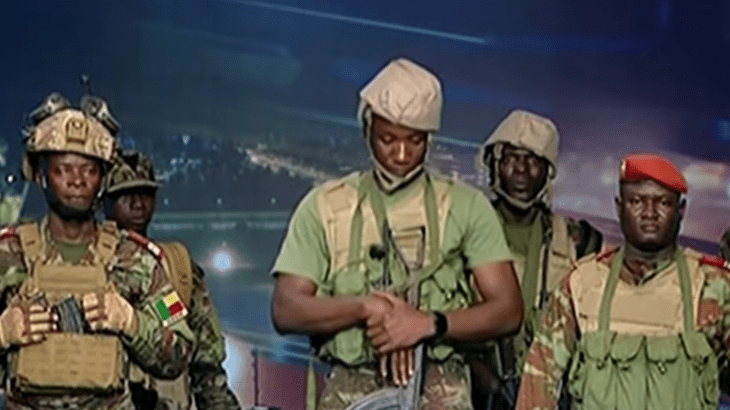
The crisis erupted just after dawn, when a group of heavily armed soldiers appeared on state broadcaster BTV, claiming they had toppled President Talon and were suspending the constitution. Eyewitnesses told the BBC that gunfire crackled near the presidential residence, and several journalists at the national broadcaster were held hostage for hours as the rebels attempted to seize the airwaves.
Helicopters circled overhead, key roads were blockaded, and a heavy military presence spread across Cotonou, prompting embassies — including France, Russia, and the US — to advise citizens to shelter indoors.
A presidential adviser later confirmed President Talon was safe, dismissing earlier rumours that he had fled to the French embassy.
The rebel group, led by Lt Col Pascal Tigri, justified their attempted takeover by accusing the president of neglecting both security and soldiers’ welfare, particularly those fighting jihadist militants along Benin’s volatile northern border with Niger and Burkina Faso.
In their televised statement, the mutineers blasted “the continuing deterioration of the security situation in northern Benin” and condemned the “abandonment” of fallen soldiers’ families. They also denounced recent cuts in health care — including cancellation of state-funded kidney dialysis — rising taxes, and sweeping limits on political activity.
Benin’s army has suffered significant casualties in recent years as Islamic State and al-Qaeda-linked militants push further south into the country, threatening to destabilize one of the region’s last remaining democracies.
Government spokesperson Wilfried Léandre Houngbédji told Reuters that 14 people have been arrested, including 12 soldiers who allegedly stormed the national TV station — among them one serviceman previously dismissed from the force.
Security sources say the situation is now “fully under control.”
The failed coup in Benin comes just a week after the controversial toppling of Guinea-Bissau’s President Umaro Sissoco Embaló, and follows a string of successful military takeovers in Burkina Faso, Mali, Niger, and Guinea. The trend has raised alarms among African Union and ECOWAS leaders, who quickly condemned Sunday’s events.
AU Commission chair Mahmoud Ali Yousouf reiterated the bloc’s “zero-tolerance stance toward any unconstitutional change of government.”
Nigeria — Benin’s powerful eastern neighbour — called the attempted coup a “direct assault on democracy” and praised Benin’s security forces for “defending the constitutional order.”
President Patrice Talon, 67, known as the “king of cotton,” is expected to leave office next year after two terms. Though praised for economic reforms, his leadership has drawn criticism for suppressing political opposition. In October, the main opposition candidate was barred from contesting presidential polls after allegedly failing to meet sponsorship requirements — a move that deepened concerns about democratic backsliding.
New constitutional amendments passed last month — including the creation of a Senate and extension of elected terms from five to seven years — have added to domestic tensions, even though the two-term presidential limit remains intact.
While loyalist troops managed to swiftly crush Sunday’s coup attempt, analysts warn that the attempted takeover underscores rising frustration within the ranks of the military and growing political strain in a country once hailed as a democratic success story.
As West Africa continues to grapple with an unprecedented wave of coups — and as global powers jostle for influence in the Sahel — Benin’s brush with military rule may serve as yet another sign that the region’s stability is hanging by a thread.