
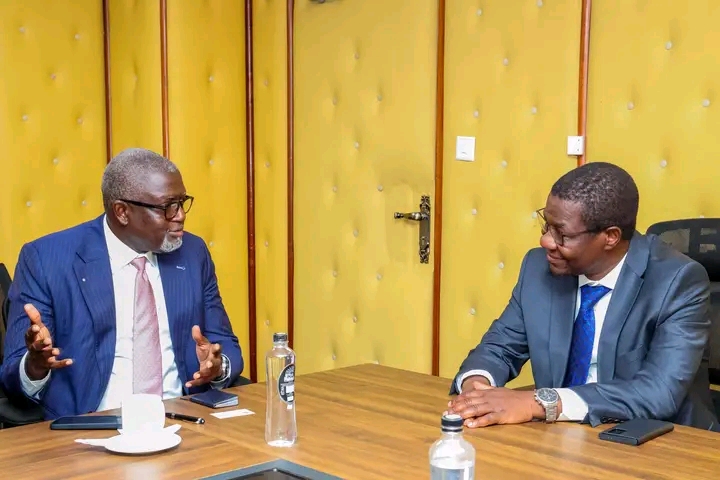
Cabinet Secretary for Energy and Petroleum, Hon. James Wandayi, hosted top executives from Africa50 who had earlier today paid a courtesy call to his office, marking a landmark moment in Kenya’s quest for long-term energy security and sustainability. This strategic engagement underscores the growing importance of the partnership between Africa50 and the Kenya Electricity Transmission Company, KETRACO, a collaboration deliberately structured to deliver cleaner, more affordable, and more reliable power to millions of Kenyans. As the country contends with rapid urbanization, expanding industrial needs, and the urgent demands of climate responsibility, Wandayi’s stewardship of the energy docket reflects a bold and pragmatic vision captured in the national call to action embodied by #PoweringTheNewKenya. This meeting was not ceremonial; it was a statement of intent that Kenya is ready to confront persistent weaknesses in its power infrastructure, from frequent outages that disrupt industrial activity to the rising cost of electricity that strains households and small enterprises. By aligning with Africa50, a respected pan-African infrastructure investment platform, Kenya is deliberately choosing collaboration over isolation and innovation over stagnation, ensuring that energy access becomes a unifying national asset rather than a limiting factor.
The broader context of this engagement lies in Kenya’s evolving energy story, one marked by ambition but constrained for years by infrastructure gaps and financing limitations. Demand for electricity has steadily grown alongside population expansion, digital transformation, and industrial development, yet transmission capacity has often lagged behind generation progress. KETRACO has worked to expand the national grid and interconnect regions, but fiscal pressures and technical challenges have slowed momentum. Cabinet Secretary Wandayi’s decision to engage Africa50 at this juncture signals a strategic pivot toward blended financing models that combine public oversight with private-sector efficiency. Through this partnership, Kenya stands to accelerate the development of critical transmission corridors, enhance grid stability, and facilitate the evacuation of power from renewable generation sites such as geothermal fields and wind-rich regions. Africa50’s continental experience in infrastructure delivery brings not only capital but also project discipline, risk management expertise, and long-term planning capacity, helping to ease the burden on public finances while keeping national interests firmly protected. The outcome is a more agile and responsive energy system capable of meeting present needs while anticipating future demand.
At the heart of this partnership is a clear commitment to the three pillars that define a functional and equitable energy system: cleanliness, affordability, and reliability. Cleaner power aligns with Kenya’s long-standing reputation as a leader in renewable energy, particularly geothermal and wind, and supports the national transition away from polluting and costly thermal generation. By strengthening transmission infrastructure, renewable energy can be integrated more efficiently into the grid, reducing waste and maximizing environmental benefits. Affordability remains a pressing concern for households and small businesses that bear the brunt of high electricity costs, and improved transmission efficiency offers a pathway to reducing losses that are ultimately passed on to consumers. Reliable power, meanwhile, is indispensable for industrial zones, technology hubs, healthcare facilities, and educational institutions, all of which depend on uninterrupted electricity to function effectively. Through modern grid management systems, improved substations, and coordinated planning, the Africa50–KETRACO partnership promises to transform electricity from a recurring bottleneck into a dependable enabler of growth. Cabinet Secretary Wandayi’s tenure has consistently emphasized these priorities, and this collaboration amplifies earlier reforms aimed at stabilizing fuel costs, expanding access, and restoring confidence in the energy sector.
Predictably, partnerships of this scale invite scrutiny, particularly in a sector as strategic as energy. Concerns about sovereignty, accountability, and equitable benefit-sharing are valid and must be addressed openly. However, Kenya’s experience with multilateral and regional energy partnerships demonstrates that well-structured agreements can strengthen, rather than weaken, national capacity. KETRACO’s past collaborations have improved cross-border connectivity, enhanced grid resilience, and created opportunities for skills transfer and local employment. Africa50’s strong African ownership and development-focused mandate further reinforce its alignment with Kenya’s long-term interests. Under Wandayi’s oversight, such partnerships are anchored in transparency, local participation, and technology transfer, ensuring that Kenyan professionals, institutions, and communities remain central to project implementation and benefit realization. For communities that remain underserved or entirely off-grid, particularly in arid and semi-arid regions, these investments are not abstract policy choices but practical interventions that unlock education, healthcare, security, and economic opportunity.
The ripple effects of a more robust and inclusive power system extend far beyond the energy sector itself. Reliable and affordable electricity underpins Kenya’s digital economy, supports innovation and entrepreneurship, and strengthens service delivery across both national and county governments. Small enterprises gain the confidence to invest and expand, agricultural value chains become more efficient through processing and storage, and public institutions operate with greater consistency and reach. Cleaner energy also reinforces Kenya’s climate commitments, reducing environmental degradation and enhancing resilience against climate-related shocks that have historically undermined hydropower reliability. In this sense, the Africa50 partnership is not merely an infrastructure initiative but a catalyst for broader socioeconomic transformation. Cabinet Secretary Wandayi’s leadership reflects an understanding that energy policy is inseparable from national development, social equity, and regional competitiveness.
In conclusion, the engagement between Cabinet Secretary for Energy and Petroleum James Wandayi and Africa50 executives represents a defining moment in Kenya’s pursuit of a secure, sustainable, and inclusive energy future. By prioritizing cleaner, more affordable, and more reliable power, this partnership lays the foundation for shared prosperity and long-term resilience. It calls upon all stakeholders—government institutions, investors, county administrations, and citizens—to support a unified vision where energy serves as a bridge to opportunity rather than a barrier. As transmission lines expand and grids grow stronger, Kenya moves closer to a future where electricity reliably powers homes, industries, and dreams alike. This is the practical meaning of #PoweringTheNewKenya, and it is a vision whose time has truly come.
James’ Kilonzo Bwire is a Media and Communication Practitioner.