
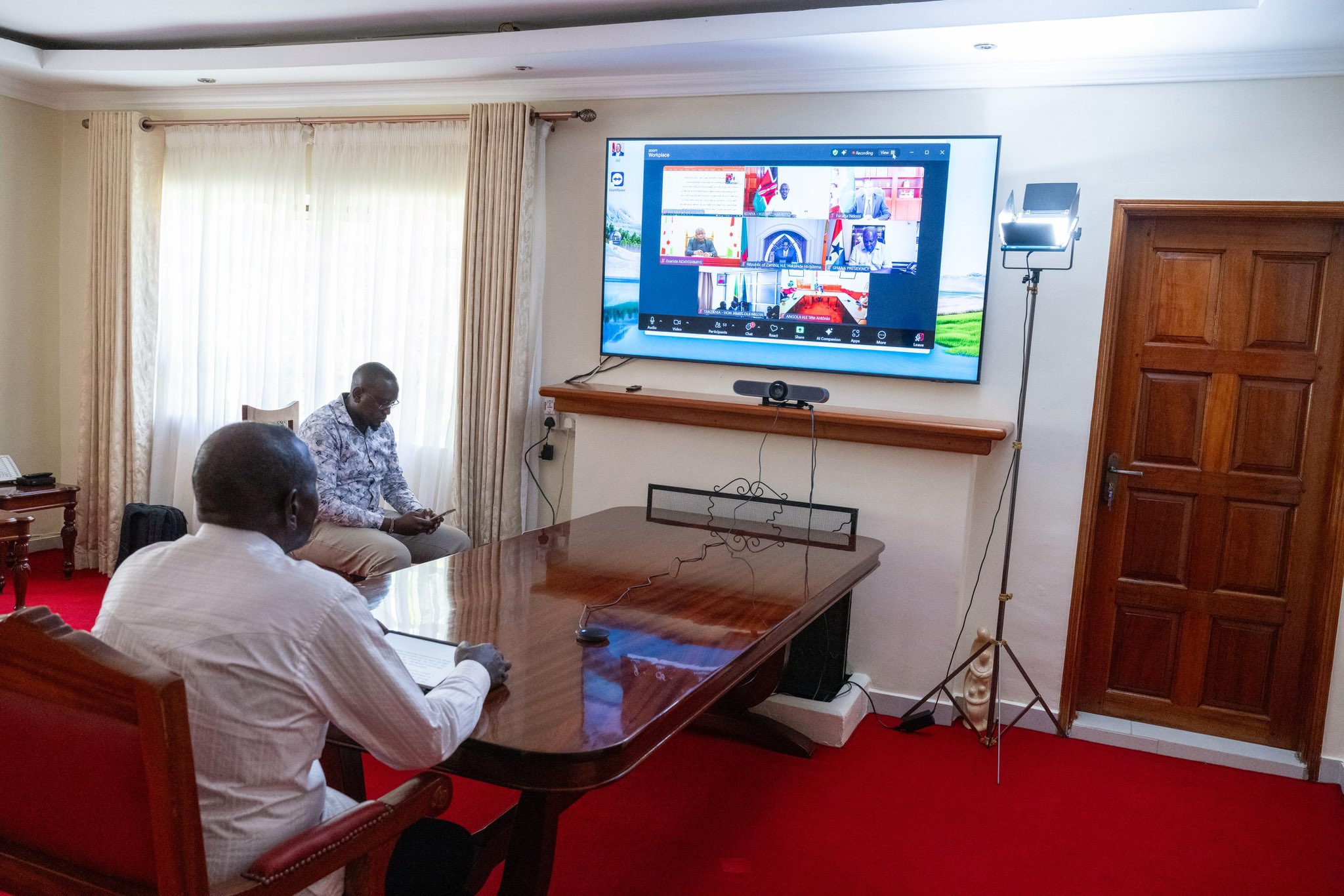
President William Ruto rallies African leaders in virtual summit to accelerate institutional reforms amid rising global and continental pressures
President Dr William Samoei Ruto has reaffirmed Africa’s push for a stronger, more responsive continental body after chairing a high-level virtual session of the African Union (AU) Institutional Reform process, positioning the reforms as urgent and non-negotiable in a fast-changing world.
In his capacity as Champion for African Union Institutional Reform, President Ruto on Thursday chaired the Third Virtual Session of the Ad Hoc Oversight Committee of Heads of State and Government, a forum tasked with steering reforms aimed at making the AU leaner, more efficient, and accountable to African citizens and member states.
“The African Union reform process remains a critical and timely undertaking,” Ruto said in a statement following the meeting, noting that evolving global realities, rising citizen expectations, and persistent peace and development challenges demand a more agile continental institution.
The session brought together a powerful cast of African leadership, including President John Dramani Mahama of Ghana, President Hakainde Hichilema of Zambia, and President Évariste Ndayishimiye of Burundi. Also in attendance were African Union Commission Chairperson Mahmoud Ali Youssouf, AU High Representative for Financing Donald Kaberuka, and senior representatives from Angola, Tanzania, Tunisia, Congo, among other member states.
At the heart of the discussions was the need to ensure the AU remains “fit for purpose”—capable of delivering on peace, security, development, and continental integration while avoiding duplication, inefficiency, and bureaucratic drag.
President Ruto emphasized that the reform agenda is not merely administrative but existential, arguing that Africa’s credibility on the global stage hinges on an AU that can act decisively, speak with one voice, and manage its resources transparently.
The reforms seek to strengthen institutional coherence, improve financial sustainability, and enhance accountability across AU organs, aligning the Union’s operations with the real needs of African people rather than distant bureaucratic priorities.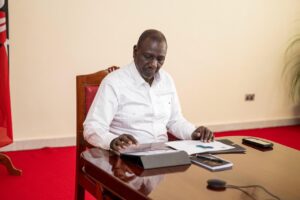
Ruto’s leadership of the reform process has increasingly placed Kenya at the centre of continental governance debates, with analysts viewing his role as pivotal in shaping the AU’s future direction—particularly as Africa navigates geopolitical shifts, climate pressures, debt vulnerabilities, and security threats.
As the reform process gathers momentum, expectations are mounting that concrete outcomes will follow—transforming the AU from a forum of declarations into a results-driven institution capable of delivering tangible change across the continent.
With Africa at a crossroads, the message from the virtual summit was clear: reform is no longer optional—it is urgent.