
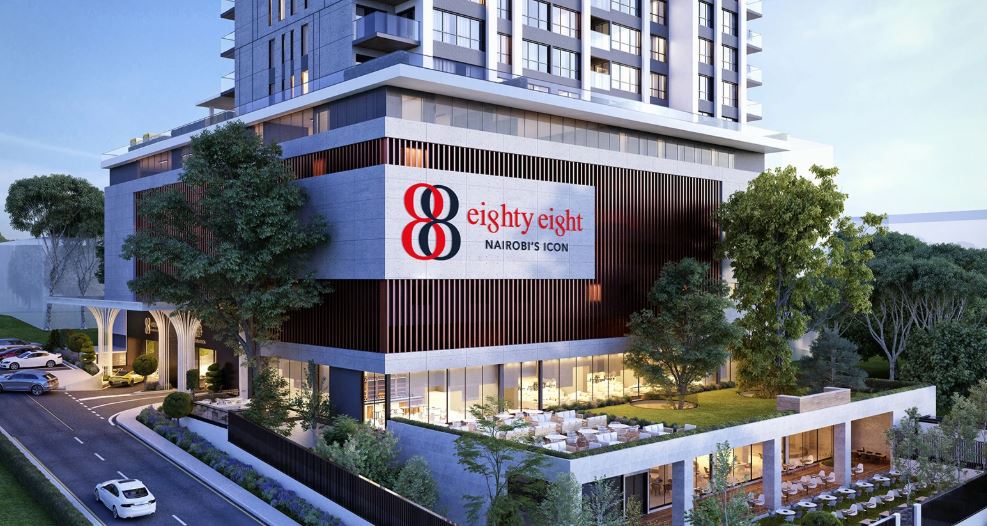
 A prominent American investor has moved to court, alleging he lost Sh225 million in a failed off-plan property deal involving the luxurious 88 Nairobi tower. The development, marketed as Africa’s tallest residential skyscraper, now finds itself at the center of a multimillion-shilling legal dispute at the Milimani Environment and Land Court.
The investor, identified in court filings as KYH, claims he fell victim to a “calculated scheme” that left him out of pocket by more than Sh161 million. The dispute involves his commitment to purchase ten premium apartments in the luxury Upper Hill project.
A “Financial Trap” in Upper Hill
Developed by Eighty-Eight Nairobi Limited, the tower was pitched to global investors as a symbol of world-class living and a high-return investment opportunity. KYH states he signed the purchase agreement in March 2024, drawn in by the promise of luxury finishes and the building’s landmark status.
By October 2024, the investor had transferred approximately $1.25 million, covering over 70 percent of the total Sh225 million price tag for seven units. However, the relationship soured when the developer reportedly issued a final notice demanding an additional $250,000 within just three days. The notice warned that failure to pay would trigger an immediate cancellation of the agreement.
In his sworn affidavit, KYH describes the aggressive timeline as unreasonable for an overseas investor.
“What was presented as Nairobi’s iconic address has turned into a financial trap,” he stated, accusing the developer of denying him a fair opportunity to settle the alleged arrears.
Check Out – STUNNING PHOTOS of Africa’s Tallest Residential Luxury Tower in Nairobi
Allegations of Technical Default
The lawsuit highlights a breakdown in communication that KYH suggests was intentional. Despite instructions to route all formal notices through his Kenyan legal team, the investor alleges the developer sent critical correspondence directly to him while he was traveling. He contends this move aimed to create a “technical default” to justify seizing his investment.
The suit also names Jonathan Jackson of the Lordship Group, who heavily promoted the tower to the Kenyan diaspora as a prime capital appreciation opportunity. Other respondents include Bank of Baroda, the Nairobi Lands Registrar, and the Attorney General.
The Sh113 Million Forfeiture Clause
A central point of contention is a contractual “liquidated damages” clause. This provision allows the developer to retain up to 50 percent of the purchase price, roughly Sh113 million in this case, if a buyer defaults. KYH labels this clause as punitive, disproportionate, and a clear instance of “unjust enrichment.”
Furthermore, the investor alleges the developer used his $1.25 million to fund ongoing construction while simultaneously refusing to transfer titles or issue a refund. Under the current agreement, any potential refund would only trigger after the units are resold to a third party, and notably, without accruing any interest.
A Potential Class Action?
This case could have wider implications for the Kenyan real estate market. KYH has asked the court to allow other buyers in similar situations within the 88 Nairobi project to join the suit. If granted, this could transform the individual dispute into a significant legal challenge against off-plan property sales practices in the country.
As of the date of publication, the respondents have not yet filed their defense. The case currently awaits further directions at the Milimani Court.