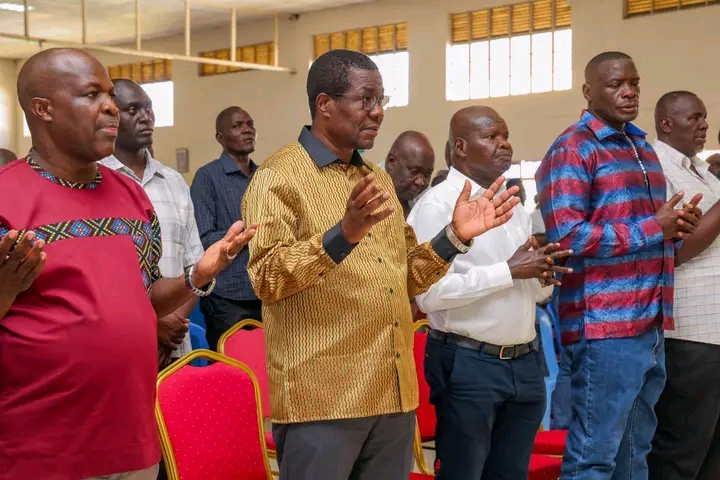
Leadership is often judged by the policies implemented, speeches delivered, or offices held. However, true, transformative leadership extends beyond these visible markers to how deeply a leader connects with the people at the grassroots level, demonstrating empathy, humility, and service. CS James Opiyo Wandayi’s recent participation in Holy Mass and parish development activities at St. Monica Catholic Church in Nyamasaria, Kisumu County, is a vivid example of such comprehensive leadership—one that serves both the state and the soul of the community.
At a time when political leadership across Kenya and beyond often appears distant, aloof, or confined within the corridors of power, Wandayi’s engagement with local parishioners breaks this mold. His presence at St. Monica’s goes beyond attending a religious ceremony; it is an act of solidarity that strengthens social fabrics that ultimately nurture nation-building. By participating in parish development, Wandayi demonstrates that the role of a leader is not only to steer national energy policies as Cabinet Secretary but also to embrace the humility of grassroots service—building institutions from the ground up.
Faith-based organizations like St. Monica Catholic Church have remained pillars of hope, moral guidance, and community cohesion across Kenyan society. These institutions are instrumental in providing the social glue that binds communities through shared values, ethical teachings, and communal solidarity. CS Wandayi’s leadership exemplifies an understanding that fostering such values within the energy and development sectors—and indeed all sectors—is not incidental but central for sustainable progress. His active hand in parish development elevates the church’s mission beyond spiritual nourishment to practical community empowerment.
This dual leadership—spiritual and administrative—positions Wandayi uniquely as a leader who models the African value of ubuntu—“I am because we are.” It is a reminder that public leadership must be relational and participative, drawing strength from community engagement to create policies grounded in real-life experiences. In an era when governance risks being technocratic and impersonal, leaders who immerse themselves in communities bridge gaps of mistrust and inspire collective ownership of national development agendas.
Furthermore, Wandayi’s parish involvement highlights the critical need for leaders to balance public office demands with personal narratives of faith and service. His example challenges the notion that leadership is confined to government buildings and cabinet meetings. Rather, impactful governance requires presence in community churches, schools, and grassroots forums where values are formed and where citizens are inspired to participate actively in their own development.
Amidst Kenya’s ambitious energy transformation agenda—where sustainable energy access and infrastructure are pivotal to economic growth—having a Cabinet Secretary who also champions grassroots development is a powerful symbol. It reinforces that policy success is not only about large-scale projects but also about how such reforms touch the everyday lives of ordinary citizens, empowering them socially, economically, and spiritually.
CS James Opiyo Wandayi’s involvement in parish life at St. Monica’s also serves a subtle but potent message about inclusivity and responsive leadership. Parish development activities require collaboration, volunteerism, and resource mobilization—principles that align with good governance and participatory democracy. By engaging directly with these processes, Wandayi sets a precedent for leaders to be visible, available, and accountable beyond formal office spaces.
In conclusion, CS Wandayi’s exemplary integration of official duties with active parish engagement redefines leadership in Kenya. It speaks volumes about the need for leaders who are more than policymakers—they must be servants, community builders, and moral beacons. As Kenya navigates complex challenges in energy, economy, and social cohesion, leaders like Wandayi remind us that sustainable progress is rooted in humility, faith, and community partnership.
The true measure of leadership success is not merely in statistics or megaproject milestones—but in building resilient, empowered communities guided by shared values. CS Wandayi’s presence at St. Monica Catholic Church and involvement in parish development activities portrays a leader committed to these ideals, one whose leadership transcends office to elevate the spirit and potential of the people he serves. Kenya’s future leadership should aspire to this model—a harmonious blend of governance, faith, and grassroots solidarity.
James Kilonzo Bwire is a Media and Communication Practitioner.