
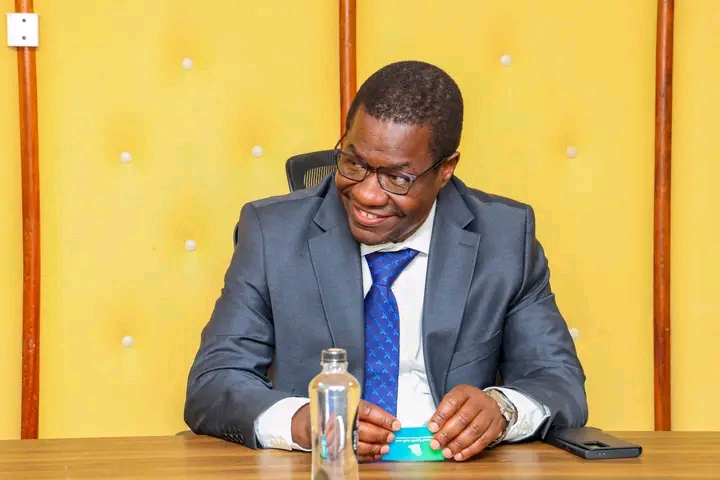
Kenya’s Early Oil Pilot Scheme in Turkana County represents one of the most consequential yet frequently misunderstood chapters in the country’s energy journey, a chapter that today finds renewed relevance under the steady and pragmatic leadership of Cabinet Secretary for Energy and Petroleum, Hon. James Wandayi Opiyo. Far from being an impulsive experiment, the scheme embodied a deliberate philosophy of learning before leaping, a philosophy that recognizes that resource development in frontier regions must be grounded in evidence, patience, and institutional preparedness. Conceived in the aftermath of oil discoveries in the South Lokichar Basin, the initiative functioned as a national rehearsal, allowing Kenya to interrogate its own readiness for oil production in real conditions rather than theoretical boardroom projections. Through the movement of crude from Turkana to the coast, the country tested not only physical logistics but also governance systems, regulatory coordination, and operational discipline in some of the most demanding environments within its borders. This approach aligns seamlessly with Wandayi Opiyo’s emphasis on realism over rhetoric, and on building capacity before committing the nation to irreversible decisions.
At its technical core, the Early Oil Pilot Scheme allowed Kenya to encounter its crude oil not as an abstract asset but as a living commodity with distinct handling requirements, market behaviors, and operational sensitivities. The country gained firsthand experience in managing waxy crude, coordinating storage and transportation, and navigating export procedures within international systems that reward precision and punish error. These lessons were not incidental; they were foundational. They shifted Kenya’s oil discourse from speculation to competence, from ambition alone to informed ambition. In this sense, the scheme provided the country with bargaining strength, equipping policymakers and negotiators with experiential knowledge rather than assumptions. Hon. James Wandayi Opiyo’s leadership reflects a clear appreciation of this value, as he continues to advocate for evidence-based decision-making that protects national interests while enhancing Kenya’s credibility among serious investors who demand clarity, consistency, and proof of capacity.
The logistical choices underpinning the pilot scheme, particularly the reliance on road transport, have often been criticized through a narrow lens that overlooks the strategic context in which the initiative was designed. In reality, this interim approach allowed the country to validate supply chains, identify infrastructure gaps, and expose coordination challenges between national and county governments long before the commitment of capital-intensive permanent systems. Rather than gamble public resources on large-scale infrastructure without adequate data, Kenya chose to test, learn, and refine. This incrementalism is not a sign of weakness but of maturity, and it is precisely the mindset that Hon. Wandayi Opiyo brings to his stewardship of the energy sector. By resisting the temptation to rush toward grand but fragile solutions, his approach prioritizes sustainability, resilience, and long-term value creation over short-term spectacle.
Beyond oil itself, the scheme catalyzed broader infrastructural transformation in northern Kenya, a region historically defined by marginalization and limited state presence. Roads were improved, access corridors strengthened, and logistical networks established in ways that transcended the oil sector and began to integrate Turkana more fully into the national economy. These developments were not isolated projects but building blocks for wider regional integration, dovetailing with national ambitions for transport and trade connectivity. Under Wandayi Opiyo’s leadership, this broader view of infrastructure as a public good rather than a single-sector asset continues to inform policy direction, reinforcing the idea that energy development should serve as a lever for inclusive national growth rather than an enclave activity divorced from local realities.
Equally significant is the environmental learning embedded within the pilot scheme. Operating at a controlled scale allowed Kenya to test environmental safeguards, emergency response systems, and monitoring frameworks in a fragile ecosystem without exposing communities or landscapes to unmanageable risk. This experience strengthened institutional awareness of the environmental dimensions of oil production and underscored the importance of vigilance, accountability, and community engagement. The lessons drawn from this phase now inform more robust environmental assessments and regulatory expectations, ensuring that future developments proceed with greater sensitivity and preparedness. Hon. James Wandayi Opiyo’s continued emphasis on responsible resource management reflects an understanding that environmental stewardship is not an obstacle to development but a prerequisite for its legitimacy and durability.
The socio-economic dimension of the Early Oil Pilot Scheme stands as one of its most transformative contributions. For Turkana communities long excluded from the mainstream economy, the initiative created tangible pathways into skilled employment, enterprise participation, and technical training. Local residents were not positioned as passive bystanders but as active contributors to the emerging oil value chain, gaining exposure to operational standards, safety culture, and commercial discipline. Women’s participation in roles traditionally closed to them further demonstrated the scheme’s potential to challenge entrenched inequalities. Under Wandayi Opiyo’s strong advocacy for local content and inclusive participation, this approach is not treated as a one-off experiment but as a policy direction that affirms the principle that natural resources must serve the people who live above them.
This emphasis on inclusion also played a critical role in building social legitimacy around oil development. By translating resource discovery into visible opportunity, the pilot scheme helped reduce suspicion and tension, fostering a sense of shared ownership and national purpose. The dialogue it encouraged between communities, county leadership, and national institutions contributed to a more balanced conversation about rights, responsibilities, and benefits. Hon. James Wandayi Opiyo’s leadership builds on this foundation, recognizing that sustainable energy development is as much about trust and social cohesion as it is about geology and finance.
Strategically, the Early Oil Pilot Scheme functioned as a safeguard against the failures that have plagued extractive projects across the continent. By identifying weaknesses early, Kenya avoided the escalation of conflicts, cost overruns, and investor disillusionment that often accompany rushed developments. The scheme reactivated wells, generated operational data, and normalized oil governance within the national psyche, reframing petroleum not as a distant elite concern but as a shared national asset tied to broader development goals. This integration of oil into Kenya’s development narrative, rather than its isolation as a standalone venture, reflects the strategic clarity that Hon. Wandayi Opiyo continues to champion.
As Kenya stands at the threshold of future production decisions, the relevance of the Early Oil Pilot Scheme becomes even clearer. It provided the country with confidence rooted in experience, not conjecture. It demonstrated that progress need not be dramatic to be meaningful, and that careful sequencing can achieve more than hurried ambition. Hon. James Wandayi Opiyo’s commendable leadership draws directly from these lessons, emphasizing continuity, institutional strengthening, and cautious scaling as the pillars of a resilient energy sector.
In an era of global energy uncertainty and shifting investment landscapes, Kenya’s measured approach offers a compelling counter-narrative to extractive haste. The Early Oil Pilot Scheme, when viewed through the lens of Wandayi Opiyo’s stewardship, emerges not as a temporary experiment but as a defining statement of intent. It affirms that Kenya’s energy future will be built through preparation, inclusion, and responsibility. By championing pilots as tools of learning and leverage, Hon. James Wandayi Opiyo positions the country to convert natural endowment into lasting national value, ensuring that oil becomes a foundation for sovereignty, opportunity, and shared prosperity rather than a fleeting promise.
James Bwire Kilonzo is a Media and Communication Practitioner.
