
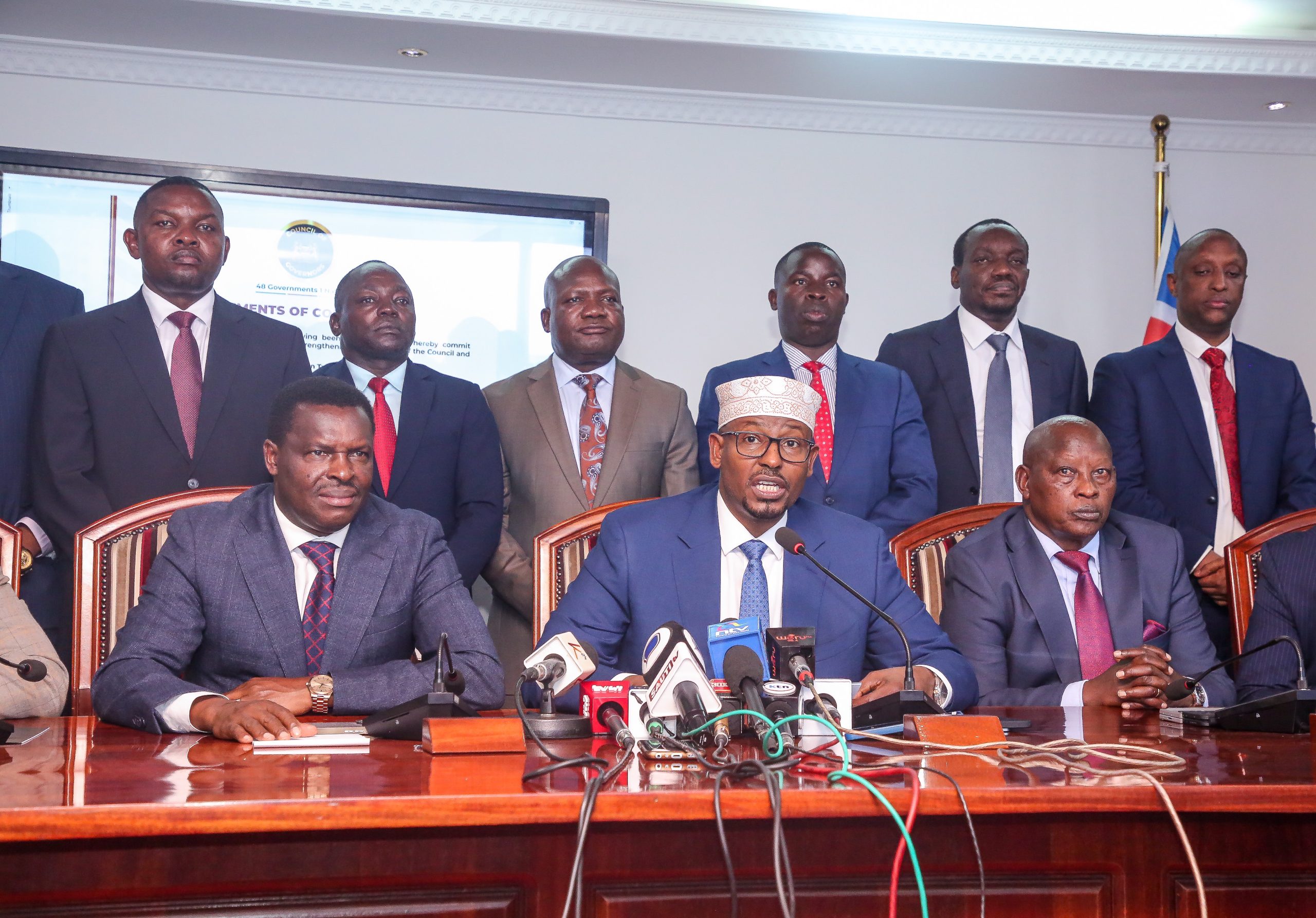
The Council of Governors (CoG) has ignited a fresh political storm after announcing the immediate suspension of all engagements with the Senate County Public Accounts Committee (CPAC), accusing some senators of turning constitutional oversight into a theatre of intimidation, extortion and public humiliation.
In a hard-hitting press statement released on Monday, February 9, the CoG said governors will no longer appear before CPAC until a structured and formal dialogue is held between the leadership of the Senate and the Council of Governors.
“The Council of Governors notes with great concern the continuous and escalating extortion, political witch-hunt, harassment, intimidation and humiliation of Excellency Governors by certain Senators when they appear before the County Public Accounts Committee,” the statement read.
According to the governors, what should be professional accountability sessions have increasingly degenerated into hostile encounters marked by alleged coercion and political grandstanding. The council warned that unless the conduct of the committee is addressed institutionally, governors will boycott CPAC sessions altogether.
In a parallel move, the CoG announced it will limit engagements with the Senate County Public Investment Committee to one appearance per audit cycle, citing repetitive summons over similar issues.
Governors complained that they are often required to appear multiple times within the same audit period to respond to investment matters touching on county funds, municipalities and public hospitals—an approach they say disrupts service delivery and amounts to administrative harassment.
“Governors will only appear once for every audit cycle,” the council resolved, signaling a tougher stance on what it termed unnecessary duplication.
The CoG’s move revives uncomfortable claims previously made by President William Ruto, who in August 2025 accused some senators of converting oversight proceedings into a “marketplace.”
Speaking during a Kenya Kwanza–ODM Parliamentary Group meeting, Ruto alleged that governors facing grilling or impeachment were sometimes asked to part with bribes running into KSh150 million.
“In the Senate, when a governor appears for grilling or impeachment, the chambers are nicknamed soko huru. Where does one even get KSh150 million? Isn’t that money meant for counties?” Ruto posed.
With the CoG now digging in its heels, Kenya appears headed for a high-stakes institutional standoff that could redefine the relationship between county governments and the Senate. At the heart of the dispute lies a critical question: can oversight remain firm without crossing into intimidation?
All eyes are now on Senate leadership to broker talks before the impasse escalates into a full-blown constitutional crisis.