
 ADVERT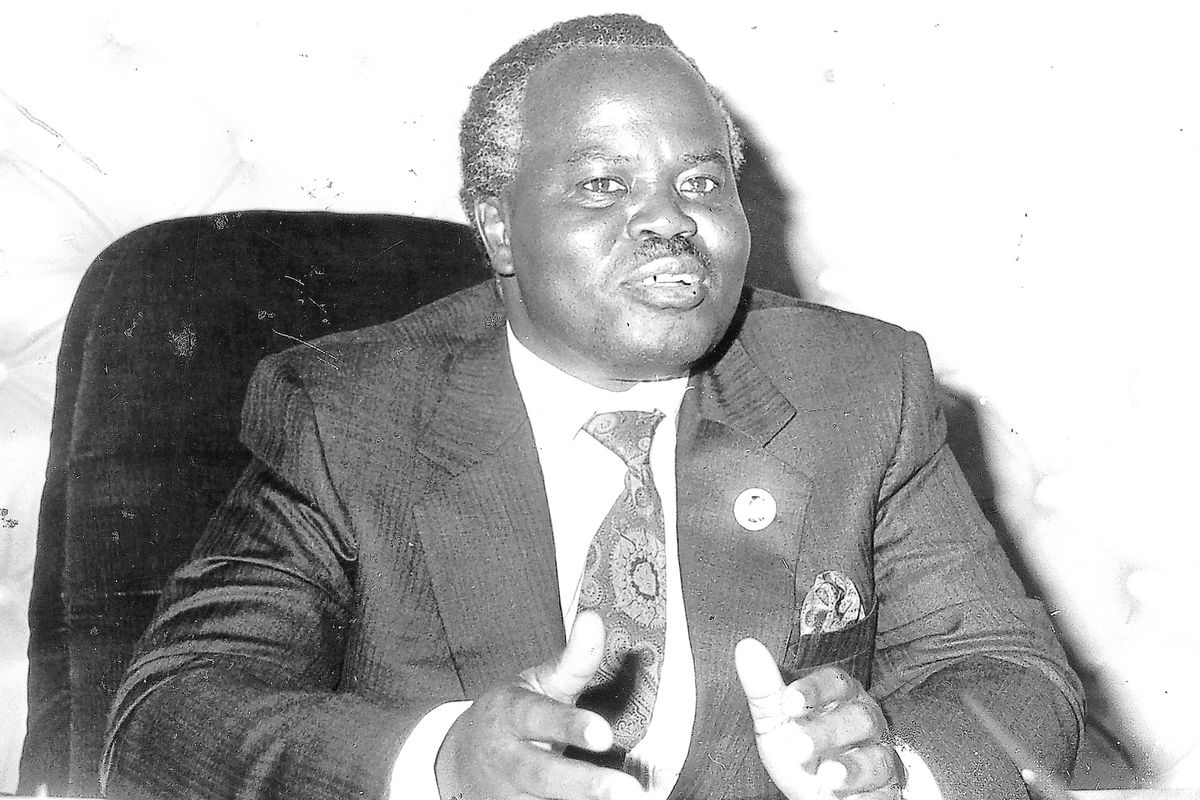
History repeatedly reminds humanity that power and wealth, no matter how immense, are transient. One of the most prominent and powerful figures ever produced by Kamagambo was Hezekiah Oyugi. His meteoric rise through Kenya’s provincial administration during the era of President Daniel arap Moi placed him at the very center of state authority.
Hezekiah Oyugi rose through the ranks from District Officer (DO), to District Commissioner (DC), then Provincial Commissioner (PC), and eventually to the influential position of Permanent Secretary for Internal Security. At the height of his authority in the late 1980s and early 1990s, Oyugi was widely regarded as one of the most powerful individuals in Kenya, often described as being third in command after President Moi and the powerful cabinet minister Nicholas Biwott.
His authority was legendary. It is recounted that when Oyugi called Provincial Commissioners from his Nairobi office, some would instinctively stand at attention and salute before even answering the phone. Veteran journalist Emman Omari once narrated an encounter with the late Western Province Provincial Commissioner John Lekolool. In the middle of their conversation, the phone rang. Lekolool picked it up, listened briefly, then stood and saluted before continuing the call. The caller was Permanent Secretary Oyugi. Such gestures, though unusual in civilian administration, reflected the aura of fear and respect surrounding his office.
Full cabinet ministers reportedly queued outside his Harambee House office waiting for an audience—an extraordinary scenario given that Oyugi was technically a civil servant. His influence extended beyond bureaucracy into local development and security matters. In his home village of Rakwaro, which had become notorious for cattle rustling in the early 1990s, an incident occurred that further cemented his reputation. According to local accounts, military trucks appeared one morning and young men between the ages of 18 and 27 were rounded up and transported to Lanet for military training. Whether exaggerated or not, the story became part of the folklore that illustrated the perceived reach of Oyugi’s power.
At the height of his wealth, Oyugi built an expansive homestead in Rakwaro for his three wives and children. The compound was said to be lavishly furnished, with rumors circulating that each house contained private vaults where cash was stored in duffel bags. His family reportedly traveled abroad frequently, vacationing in cities such as Paris. The home became a symbol of prestige, often visited by senior government officials, including President Moi himself whenever he toured South Nyanza.
Yet time, as history consistently demonstrates, spares no empire. Less than two decades after his death, the once-grand homestead fell into decay. Overgrown bushes and dilapidated roofs replaced the former splendor. The compound, once bustling with activity and guarded by authority, now stood silent—a stark reminder of the impermanence of worldly power.
Oyugi’s death itself remains surrounded by controversy. In February 1992, he died suddenly while in government custody following investigations into alleged corruption and political intrigues within the state. Some accounts suggest he fell ill during interrogation, while others claim he may have been poisoned. His death sparked debate about internal power struggles within the Moi administration, illustrating how proximity to power can also invite vulnerability. The very system that elevated him appeared, in the eyes of many observers, to have contributed to his downfall.
History offers many parallels. Mobutu Sese Seko of Zaire ruled with immense wealth and authority for over three decades. He amassed enormous personal riches and built palaces across the country, yet he died in exile, far from the nation he once controlled. Idi Amin of Uganda, once feared across East Africa, ended his days in Saudi Arabia, stripped of power and influence. Benito Mussolini of Italy, who ruled with authoritarian dominance, was captured and executed, his body publicly displayed. Adolf Hitler, who commanded vast armies and sought global domination, died in a bunker as his regime collapsed. Even Alexander the Great, one of history’s most celebrated conquerors, who built an empire stretching from Greece to India, died at a young age. According to tradition, he requested that his hands be left outside his coffin to show the world that he carried nothing with him in death.
The lesson from these histories is unmistakable. Power is temporary. Wealth is fleeting. Authority, no matter how absolute, eventually dissolves. What remains is not the magnitude of influence but the legacy of character, justice, and service to humanity.
Hezekiah Oyugi’s story, like those of great rulers before him, serves as a cautionary tale. The pursuit of wealth and power should be tempered with humility, integrity, and an awareness of life’s brevity. No matter how high one rises, the end is the same: all human beings return to the earth empty-handed.
In reflecting on Oyugi’s abandoned homestead, one is reminded that greatness built solely on authority fades quickly, but greatness built on values endures. History therefore calls upon present and future generations to seek not only power, but purpose; not only wealth, but wisdom; and not only influence, but impact.
By Alphonso Bernard Otieno – A Historical and Political Researcher
