
 ADVERT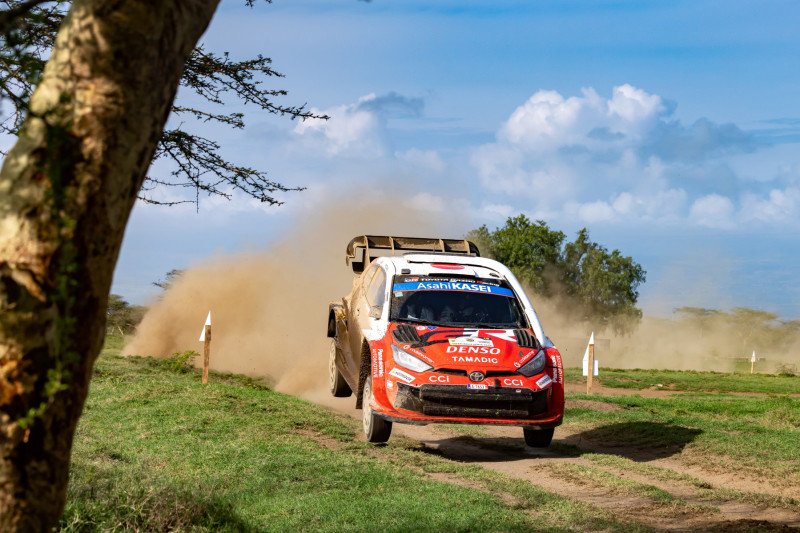
The brutal terrain of the legendary Safari Rally Kenya once again lived up to its reputation on Saturday as Japan’s Takamoto Katsuta surged into the overall lead after a dramatic and punishing Day Three that left several frontrunners stranded in mud and mechanical trouble.
Driving for Toyota Gazoo Racing World Rally Team, Katsuta produced a calm and calculated performance through treacherous stages around Lake Elmenteita to end the penultimate day with a commanding advantage of 1 minute 25.5 seconds over France’s Adrien Fourmaux in a Hyundai i20 N Rally1.
The Safari Rally has long been regarded as one of the toughest rounds of the World Rally Championship, and Saturday’s stages proved why.
Overnight rain transformed the gravel tracks into thick, slippery mudfields littered with hidden rocks. The morning loop — featuring Soysambu, Elmenteita and the iconic Sleeping Warrior stage — quickly turned into a survival test rather than a pure speed contest.
At the start of the day, Sweden’s Oliver Solberg and eight-time world champion Sébastien Ogier were separated by just one second at the top of the standings. But their battle unravelled almost immediately when Ogier was forced to stop and change a damaged tyre in the opening stage, losing nearly two minutes.
Solberg initially capitalised by posting the fastest time in the stage, while Ogier responded with victories in the following two tests in a bid to recover lost ground.
The Safari’s unforgiving terrain soon began claiming more victims.
Hidden rocks beneath the mud triggered punctures for several drivers, including championship contender Elfyn Evans, who lost tyre pressure during the Elmenteita stage before suffering suspension damage that forced him to retire from the day’s action — his first rally retirement since the Acropolis Rally Greece in 2024.
Things only worsened for Toyota later in the morning. Both Solberg and Ogier completed the brutal Sleeping Warrior stage in the top two positions, but their cars suffered critical alternator failures on the road section to service after mud contamination stopped their batteries from charging.
Solberg’s car also sustained transmission damage, forcing both drivers out of the day’s competitive running.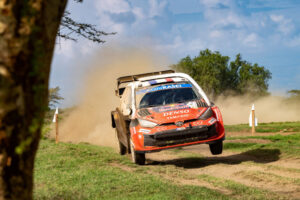
While rivals fell victim to the harsh conditions, Katsuta quietly executed a disciplined strategy.
Starting the day seventh overall after a double puncture on Friday, the Japanese driver focused on staying out of trouble rather than chasing outright stage wins.
His patience paid off.
By the afternoon loop he had taken control of the rally, extending his lead comfortably before the second pass of Sleeping Warrior was cancelled due to dangerously deteriorating stage conditions.
“Everybody knew today would be very tough and that a lot of drama could happen,” Katsuta said. “I was just trying to stay away from problems and manage the situation, avoiding the rocks as much as possible.”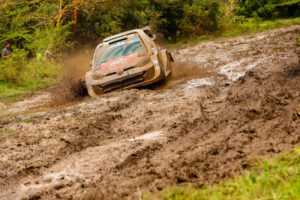
Another strong performer was Finland’s Sami Pajari, who clawed his way back into podium contention despite losing five minutes earlier in the day due to severe tyre damage.
After Toyota mechanics repaired his car during midday service, Pajari stormed back with his fifth stage victory of the rally and ended the day third overall.
Meanwhile, Finland’s Esapekka Lappi held fourth position for Hyundai, while Estonia’s Robert Virves led the Rally2 field in a Škoda Fabia RS Rally2.
Despite the chaos, the rally remains far from over.
Sunday’s final leg will take crews south to the dramatic landscapes around Lake Naivasha, where two stages will be run twice without service. The rally will conclude with the spectacular Hell’s Gate Power Stage, offering crucial championship bonus points.
With several top drivers set to restart under rally rules and push for Super Sunday points, the final day promises another intense chapter in one of motorsport’s most demanding events.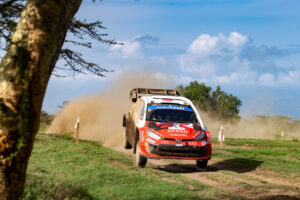
For Katsuta, however, the mission is clear: survive.
“There’s still a long day ahead tomorrow,” he said. “I will stay focused and try my best to bring the car home.”