
 ADVERT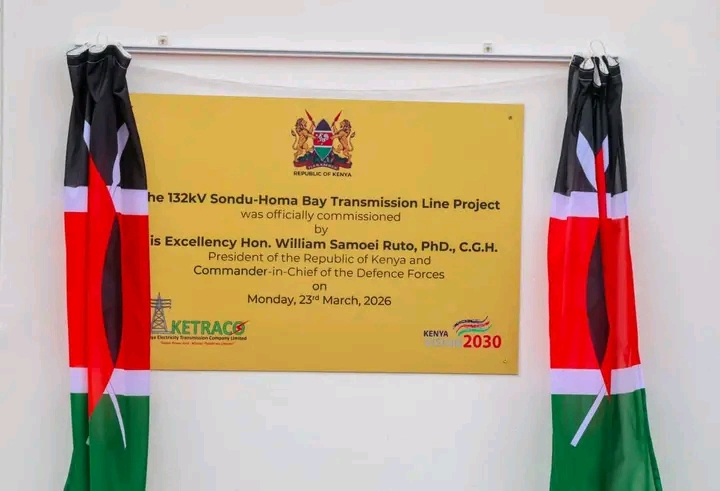
The commissioning of the Sondu–Homa Bay Transmission Line by Cabinet Secretary for Energy and Petroleum Opiyo Wandayi alongside President William Samoei Ruto in Homa Bay County represents a deliberate step toward fortifying Kenya’s electricity infrastructure. Delivered by the Kenya Electricity Transmission Company Limited under the Ministry of Energy, this project addresses longstanding challenges in power supply across South Nyanza. It directly tackles persistent outages that have hindered daily life and economic activities in the region. By enhancing power reliability and voltage stability, the initiative ensures a more consistent energy flow, which is essential for communities and businesses reliant on uninterrupted electricity. This development underscores the government’s commitment to prioritizing energy infrastructure as a foundation for national progress, particularly in underserved areas like South Nyanza where such improvements have been long overdue.
A key aspect of this transmission line lies in its role in reducing the distance power travels from generation sources, thereby minimizing inefficiencies in the supply chain. Previously, longer routes contributed to vulnerabilities in the network, but this shorter path streamlines delivery and cuts down on losses during transmission. The result is a more efficient system that supports steady power availability without the frequent disruptions that have plagued the area. This efficiency gain is not merely technical; it translates into practical benefits for residents and enterprises, allowing them to plan operations with greater certainty. The involvement of high-level leadership in the commissioning signals strong political will to sustain such investments, reinforcing the idea that reliable energy is a public good that demands focused governmental action. South Nyanza now stands better positioned to integrate into the broader national grid, fostering a sense of equity in energy access across Kenya.
Beyond immediate reliability, the project introduces an alternative evacuation route from the Sondu and Sang’oro generation stations, bolstering the overall resilience of the power system. This redundancy means that disruptions in one pathway no longer threaten the entire region’s supply, providing a buffer against unforeseen challenges. System resilience of this nature is critical in a country where energy demands are rising and infrastructure must adapt to growing needs. The transmission line thus serves as a strategic enhancement, ensuring that power generation can be effectively utilized even under varying conditions. For South Nyanza, this means a departure from reactive fixes toward a proactive framework that safeguards energy security. The Ministry of Energy’s oversight through the Kenya Electricity Transmission Company Limited demonstrates effective public sector coordination, setting a model for how targeted projects can yield widespread stability.
This infrastructure milestone opens pathways for industrial growth in South Nyanza by providing the dependable power backbone that manufacturers and processors require. Industries that once hesitated due to unreliable supply can now expand operations, drawing in investments and scaling production. Trade activities benefit similarly, as consistent electricity enables markets, shops, and transport hubs to function smoothly, linking local producers to wider markets. Job creation follows naturally, with new opportunities in construction, maintenance, and emerging sectors fueled by stable energy. Household electricity connectivity accelerates as well, bringing more homes online and supporting essential services like lighting, refrigeration, and communication. These outcomes highlight how energy infrastructure drives economic vitality at the grassroots level.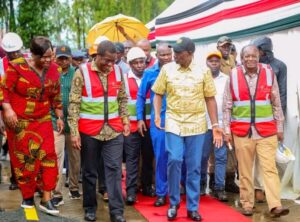
The Ministry of Energy’s role in overseeing such projects through entities like the Kenya Electricity Transmission Company Limited ensures alignment with national goals. This line fits into a larger strategy to interconnect generation sites with demand centers, optimizing the use of Kenya’s hydropower resources in areas like Sondu and Sang’oro. South Nyanza, with its proximity to these stations, emerges as a logical hub for distribution, reducing strain on overextended national lines. The commissioning reinforces the case for devolved energy planning, where county-level needs inform national execution. President Ruto and CS Wandayi’s joint effort illustrates cross-level collaboration, vital for bridging policy intent with on-ground delivery. Such synergy counters historical neglect of western Kenya’s energy potential, paving the way for balanced regional development.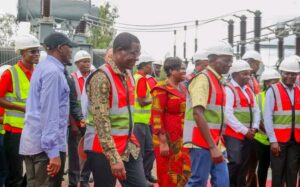
Looking at Kenya’s energy sector, this transmission line advances the push for universal access and efficiency. It complements efforts to harness local generation while fortifying evacuation networks, ensuring no region lags behind. South Nyanza’s gains challenge the urban-rural divide in infrastructure, promoting a unified grid that serves all Kenyans equally. The project’s success validates public investment in transmission as a multiplier for economic and social returns. Continued focus on similar initiatives will solidify energy as a driver of inclusion, where stable supply empowers communities to pursue self-reliance. Homa Bay County’s milestone sets expectations for adjacent areas, urging accelerated rollout to maximize collective benefits.
Government commitment, as shown in Homa Bay, must extend to maintenance and expansion to sustain these gains. The Ministry of Energy holds the mandate to monitor performance, address emerging gaps, and integrate new technologies for even greater efficiency. South Nyanza’s transformed grid positions it to support agroprocessing, tourism, and light industry, sectors ripe for growth with reliable power. Trade links strengthen as powered cold chains preserve fish and produce from Lake Victoria, boosting exports. Job opportunities multiply in skilled trades, drawing youth from idleness to productive roles. Household electrification supports small enterprises like welding shops and cyber cafes, fostering entrepreneurship at the family level.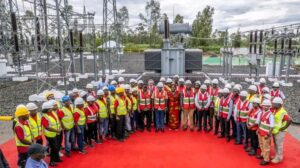
Ultimately, the Sondu–Homa Bay Transmission Line embodies Kenya’s trajectory toward energy-led development. It resolves supply bottlenecks, builds redundancy, and catalyzes economic activity in South Nyanza. National leaders’ engagement affirms that infrastructure equity is non-negotiable, with the Ministry of Energy steering implementation. As effects unfold, the region will experience heightened vitality, contributing to national goals. This project proves that targeted energy enhancements yield enduring progress, calling for relentless pursuit of similar advancements nationwide. Kenya advances when every corner accesses the power to thrive.
James Kilonzo Bwire is a Media and Communication Practitioner.