
 ADVERT
Energy and Petroleum Cabinet Secretary Opiyo Wandayi officially flagged off the Last Mile Connectivity Projects in Londiani Sub County, Kipkelion East Constituency, Kericho County. Accompanied by Area MP Hon. Dr. Joseph Kimutai Chororot, Wandayi visited Tendeno and Umoja villages to launch electrification projects initiated by KPLC and REREC. These projects connect rural households and small businesses across several neighboring villages in the larger Kipkelion East community. The initiatives align with President Ruto’s commitment to expand electricity access nationwide, enabling more Kenyan families, enterprises, and institutions to benefit from reliable and affordable power as the country advances toward universal grid connectivity. This event marks a practical step in addressing long standing gaps in rural energy infrastructure, where many communities have relied on limited or unreliable sources for daily needs. Wandayi’s direct involvement underscores the government’s focus on translating policy promises into on the ground action, particularly in agricultural regions like Kericho County that depend on consistent power for productivity.
The flag off in Kipkelion East highlights how targeted electrification efforts strengthen local economies and community stability. In villages such as Tendeno and Umoja, households gain access to power that supports basic lighting, cooking, and communication devices, while small businesses secure the energy required for operations like milling, refrigeration, and machinery. This connectivity fosters greater participation in the national economy, as residents engage more effectively with markets and services. MP Chororot’s presence alongside Wandayi demonstrates effective collaboration between national and constituency leaders, ensuring that projects address specific local priorities. Kericho County’s rural areas, with their emphasis on tea farming and small scale trade, stand to benefit directly from these developments, as reliable power reduces operational disruptions and supports value addition in agriculture. The involvement of KPLC and REREC reflects a coordinated approach, where public utilities work together to extend the grid efficiently. Such partnerships are essential for scaling similar initiatives across other constituencies, proving that decentralized execution can deliver results without unnecessary delays.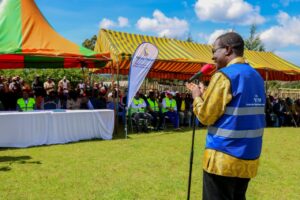
President Ruto’s broader agenda on electricity access positions these projects as part of a sustained national drive to integrate rural Kenya into the modern economy. By prioritizing last mile connectivity, the government tackles one of the key barriers to development in underserved regions, where lack of power has historically limited education, health services, and entrepreneurship. Wandayi’s leadership in the Energy and Petroleum docket ensures that policy implementation remains responsive to regional needs, as seen in the tailored rollout for Kipkelion East. This approach builds public trust in leadership, showing that commitments made at the national level translate into tangible improvements at the grassroots. In Kericho County, the projects reinforce the constituency’s role in Kenya’s agricultural backbone, enabling farmers and traders to adopt better practices that boost output and income. The flag off also signals to other counties the feasibility of replicating such models, encouraging MPs and local leaders to advocate for their areas. Through these efforts, the administration demonstrates accountability, as ministers like Wandayi engage directly with communities to monitor progress and address challenges.
Expanding electricity access requires ongoing investment in infrastructure and maintenance, areas where the Kipkelion East projects set a strong example. KPLC and REREC’s role in execution highlights the importance of technical expertise in rural settings, where terrain and population distribution pose unique challenges. Wandayi’s visit to Tendeno and Umoja villages allowed for firsthand assessment, enabling adjustments based on local feedback. This hands on method contrasts with past approaches that often left rural electrification as an afterthought, and it aligns with the need for adaptive governance in Kenya’s diverse landscapes. MP Chororot’s participation further strengthens the link between constituency representation and national programs, ensuring that funds and resources reach intended beneficiaries. As these projects connect households and businesses, they pave the way for secondary benefits, such as improved school performance through better study conditions and enhanced health outcomes through powered clinics. The initiative in Londiani Sub County therefore demonstrates how energy access contributes directly to social and economic progress in rural communities.
Critics of government projects sometimes question their long term viability, but events like this flag off provide evidence of commitment to sustainability. Wandayi’s oversight ensures that connections are not one off installations but part of a network designed for durability and expansion. In Kipkelion East, the projects address immediate needs while preparing the ground for future growth, including the possibility of integrating renewable energy solutions and improved power management systems. President Ruto’s vision for universal grid connectivity demands such proactive steps, particularly in counties like Kericho that contribute significantly to the country’s agricultural output. The collaboration with local leadership, as embodied by Chororot, reduces the risk of mismanagement and encourages community ownership of the infrastructure. Residents in affected villages now have a shared responsibility in safeguarding the new connections, which promotes accountability at the local level and ensures that the benefits of electrification remain sustainable for years to come.
The significance of these electrification efforts also extends to Kenya’s broader economic development. Reliable power in rural areas such as Kipkelion East allows communities to expand beyond traditional farming and encourages the emergence of small enterprises and service based activities. Wandayi’s role in supporting these projects highlights the importance of the Energy and Petroleum Ministry in advancing inclusive development across the country. By focusing on closing the last mile connectivity gap, the government demonstrates its commitment to ensuring that development opportunities reach all regions rather than remaining concentrated in urban centers. The launch in Tendeno and Umoja villages illustrates how local development initiatives can contribute to national progress by empowering communities to participate more actively in economic life.
Looking ahead, the Kipkelion East flag off reinforces the importance of sustained commitment to rural electrification across Kenya. Wandayi’s engagement with the local community sets a standard for leadership that prioritizes accountability and direct interaction with citizens. This approach strengthens confidence in government initiatives and demonstrates that national development programs are capable of delivering tangible improvements at the grassroots level. President Ruto’s commitment to expanding electricity access gains further credibility through such actions, showing that the goal of universal connectivity is achievable when supported by effective coordination between ministries, public agencies, and local leadership. In Kericho County, the benefits of these projects will extend to education, health services, and small scale enterprises, creating conditions that support long term development. The collaboration between national institutions and constituency leaders in Kipkelion East therefore represents an important step in ensuring that rural communities are fully included in Kenya’s development journey under the vision of Powering The New Kenya.
James’ Kilonzo Bwire is a Media and Communication Practitioner.