
 ADVERT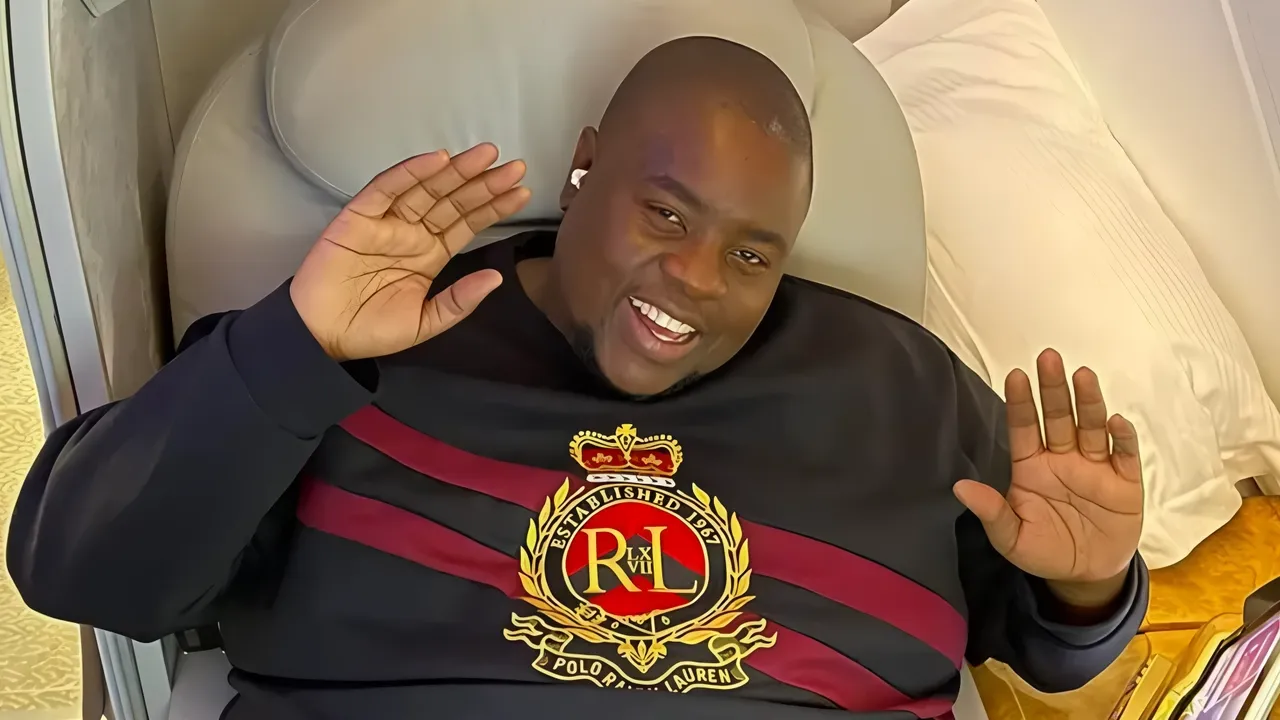
Wicknell Chivayo lived a life that appeared almost deliberately constructed to blur the boundaries between business, celebrity, philanthropy and political power. He was a Zimbabwean businessman who became famous not merely for the companies he controlled or the contracts associated with his name, but for the extraordinary lifestyle he displayed and the remarkable access he appeared to enjoy to some of Africa’s most powerful political figures.
His death in a helicopter crash near Marondera, east of Harare, on September 30, 2026, brought that extraordinary life to a sudden end. He was 43. His wife, Lucy “Lulu” Muteke, and four other people also died in the crash.
Yet Chivayo’s death has done more than close the chapter on a flamboyant businessman. It has revived interest in the complicated story of his rise, his wealth, his political relationships, his philanthropy and the controversies that periodically surrounded his business dealings.
To understand Wicknell Chivayo is to understand a particularly modern African phenomenon: the emergence of extraordinarily wealthy entrepreneurs whose businesses, social influence, philanthropy and relationships with political power increasingly overlap.
Chivayo was born in Zimbabwe and rose through the energy and infrastructure sector, most prominently through Intratrek Zimbabwe, a company associated with major power projects. His name became particularly prominent around the proposed 100-megawatt Gwanda solar project, an ambitious undertaking intended to contribute to Zimbabwe’s electricity supply.
The project would eventually become one of the defining controversies of his career.
Chivayo and Intratrek faced criminal proceedings concerning an advance payment of approximately US$5.6 million linked to the solar project. The businessman denied wrongdoing. His legal battles subsequently produced significant developments, including the quashing of charges by the High Court and later proceedings in which the matter was removed from the magistrates’ court roll amid prosecutorial delays.
His earlier legal history was similarly complicated. In 2005, he was convicted in a money-laundering case and imprisoned, but he challenged the conviction and eventually succeeded on appeal.
These episodes became part of the public narrative surrounding him, although they must be distinguished carefully from findings of guilt. Allegations, charges and convictions overturned on appeal are not interchangeable categories, and Chivayo’s record illustrates why the distinction matters when assessing the life of a controversial public figure.
But it was not his courtroom battles that transformed him into one of Zimbabwe’s most recognisable businessmen.
It was his money.
And, perhaps more importantly, the way he chose to display it.
Chivayo turned conspicuous wealth into a form of personal branding. Luxury vehicles, expensive watches, private aviation, lavish holidays and enormous cash gifts became recurring features of his social-media presence. He gave cars to musicians, sporting personalities and other prominent individuals, while large donations to churches and community causes further established his reputation as an extravagant benefactor.
He became known as “Sir Wicknell”.
To his admirers, the image was inspirational. Here was a businessman who appeared to have transformed his circumstances into extraordinary wealth and was prepared to distribute some of it to other people. His philanthropy became particularly popular among young Zimbabweans, many of whom viewed him as evidence that spectacular success was possible.
But Chivayo’s philanthropy also raised a more complicated question: what happens when generosity operates in the same social ecosystem as political influence, celebrity and business?
A gift is not evidence of corruption. Nor does a photograph with a politician establish that a business deal was improperly obtained. But when a businessman simultaneously displays immense wealth, cultivates relationships with political elites and participates in businesses dependent on large public or state-linked contracts, scrutiny is inevitable.
Chivayo appeared to understand the power of visibility.
He did not hide from the spotlight. He embraced it.
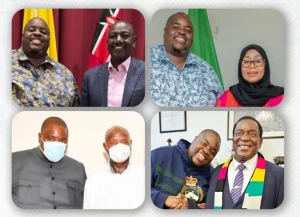
His photographs with presidents and other powerful personalities became part of his public mythology. His relationship with Zimbabwean President Emmerson Mnangagwa attracted particular attention, while his connections extended beyond Zimbabwe.
That international profile became increasingly visible in Kenya.
Chivayo developed a public relationship with President William Ruto, and in August 2026 he shared footage showing Ruto personally driving him towards a waiting helicopter after attending the traditional engagement ceremony of the President’s daughter, Charlene, in Kilgoris, Narok County.
The footage generated considerable interest because it provided an unusually intimate glimpse into the relationship between a sitting African president and a foreign businessman.
After Chivayo’s death, Ruto publicly mourned him and referred to him as a friend.
That friendship, by itself, does not establish that Chivayo received preferential treatment from the Kenyan government. Nor should a personal relationship automatically be interpreted as evidence of an improper transaction.
But the episode became particularly significant because Chivayo’s name had already surfaced in public debate surrounding Kenya’s proposed modernisation of Jomo Kenyatta International Airport.
Reports linking him to the project triggered questions about the proposed arrangement, the contractors involved and the scale of the investment. Government officials subsequently disputed aspects of the reports, including claims concerning the value of the project and Chivayo’s role in it.
The controversy highlighted an issue that extends far beyond one businessman.
Kenya is entering an era of enormous infrastructure investment. Airports, energy projects, roads, ports and digital infrastructure require billions of shillings in capital. Such projects naturally attract international investors and entrepreneurs with political connections across borders.
The critical issue is therefore not whether a businessman knows a president.
The critical issue is whether public contracts are awarded through transparent, competitive and legally defensible processes.
That distinction is essential.
A businessman may be politically connected and still legitimately win a contract. Conversely, a businessman may appear publicly respectable while benefiting improperly from state influence. Neither conclusion can responsibly be reached merely from photographs, friendships or social-media displays.
Chivayo’s name also became entangled in controversy surrounding Zimbabwe’s 2023 election procurement. Allegations concerning election materials, payments and politically connected intermediaries generated substantial public debate.
Yet subsequent investigations by Zimbabwe’s anti-corruption authorities did not establish the fraud allegations that had circulated publicly against Chivayo in connection with the election materials controversy.
That episode offers another important lesson about his life: controversy and evidence are not the same thing.
Chivayo attracted controversy partly because he made himself unusually visible. His lifestyle was impossible to ignore. His public associations were extensive. His philanthropic gestures were frequently spectacular. His business interests intersected with sectors where governments were major customers.
The result was a businessman whose public persona often appeared larger than his companies.
That distinction matters because wealth can create an illusion of explanation. The more extravagant the lifestyle, the easier it becomes for observers to assume that they understand where the money came from. But luxury is not an audited balance sheet.
Determining the legitimacy of wealth requires contracts, company accounts, tax records, financing arrangements, regulatory findings and judicial evidence.
Chivayo’s social-media pages could show a Rolls-Royce, a mansion or a multimillion-dollar gift.
They could not, by themselves, explain the complete financial architecture behind the fortune.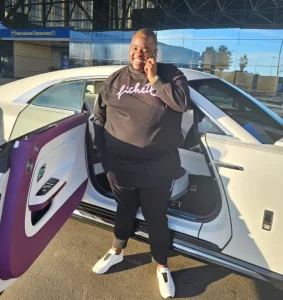
This is where his story becomes bigger than Wicknell Chivayo.
Across Africa, the distance between business and politics is often remarkably short. Governments control enormous procurement budgets, infrastructure concessions, licences, land, energy projects and regulatory decisions. Successful businessmen naturally seek relationships with political leaders. Politicians, in turn, inevitably interact with influential entrepreneurs.
The challenge is ensuring that personal relationships do not replace institutional processes.
Chivayo’s life also demonstrates the complicated role of philanthropy in societies where public resources are limited and inequality remains profound.
When a wealthy individual gives a struggling family a car, pays someone’s medical bill or finances a community project, the immediate beneficiary may have every reason to be grateful.
But philanthropy cannot become a substitute for functioning public institutions.
Nor should the ability of a wealthy individual to distribute enormous sums of money determine social status or political influence.
The enduring question is whether institutions can remain stronger than personalities.
Chivayo was, in many respects, a personality-driven businessman. His name became a brand. His generosity became content. His friendships became part of his public mythology. His wealth became entertainment as much as evidence of commercial success.
And perhaps that is why his sudden death has generated such extraordinary interest.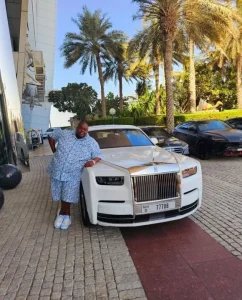
He was not simply another businessman whose name appeared in corporate registers. He had turned his life into a public spectacle.
The helicopter crash has therefore frozen an extraordinary story at its most dramatic point.
A 43-year-old businessman who had built a reputation for living extravagantly, moving comfortably among political elites and giving away extraordinary amounts of money was suddenly gone.
But the questions surrounding his business legacy will not disappear with him.
What companies will survive him? What assets did he control? What contracts were completed? What obligations remain? Who will inherit his wealth? And, most importantly, what will the documentary record eventually establish about the business empire that produced it?
Those questions belong to courts, regulators, auditors, investigators and historians—not social media.
Wicknell Chivayo’s life cannot responsibly be reduced to either heroism or scandal.
He was a businessman who became extraordinarily wealthy, a philanthropist whose generosity made him popular, a celebrity who cultivated visibility and a politically connected figure whose proximity to power repeatedly attracted scrutiny.
His admirers will remember the generosity.
His critics will remember the controversies.
The business world will remember the deals.
Politicians will remember the friendship.
And the public will continue asking how a man could move so effortlessly between boardrooms, presidential circles, celebrity culture and spectacular displays of wealth.
Perhaps the most enduring lesson of Wicknell Chivayo’s life is not about the man himself, but about the system around him.
When private wealth comes close to public power, institutions must be strong enough to ensure that friendship does not become influence, influence does not become privilege, and privilege does not become an alternative route to public resources.
Chivayo flew extraordinarily close to the sun.
In the end, however, the most important question is not how high he flew.
It is whether the institutions beneath him were strong enough to withstand the heat.
