
 ADVERT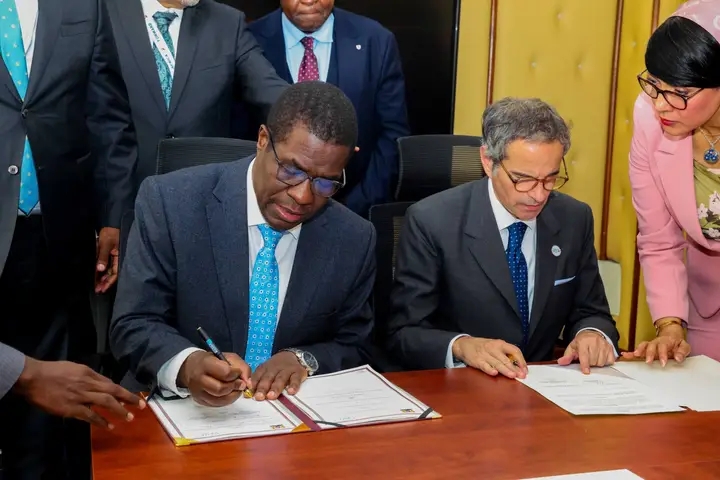
Cabinet Secretary Opiyo Wandayi today marked a pivotal moment in Kenya’s energy sector by signing a landmark Memorandum of Understanding with IAEA Director General Rafael Mariano Grossi, committing the nation to integrate nuclear energy into its national grid. The agreement, witnessed by NuPEA CEO Justus Wabuyabo, Principal Secretary for Energy Alex Wachira, and Principal Secretary Shaukat Abdulrazak from the Office of the Prime Cabinet Secretary alongside other senior government officials, signals a deliberate and calculated shift toward sustainable energy transformation. The ceremony was not merely a diplomatic engagement between Kenya and an international institution, but a declaration of intent by a government seeking to redefine the country’s long-term energy future. At a time when nations across the world are searching for dependable and cleaner energy alternatives, Kenya has now openly positioned itself within the global conversation on nuclear energy development. The signing of the MoU therefore represents more than an administrative process; it introduces a new chapter in the country’s energy policy and development agenda.
The news surrounding the agreement immediately captured national attention because of the significance attached to nuclear power as a source of reliable baseload energy. For years, Kenya’s energy discourse has revolved around expanding access to electricity while maintaining affordability, sustainability, and consistency in supply. The challenge has always been how to secure an energy mix capable of supporting industrial growth, urbanization, technological advancement, and population expansion without exposing the country to frequent shortages or overdependence on a single source of power. By signing the MoU with the International Atomic Energy Agency, Opiyo Wandayi reinforced the government’s position that the future of Kenya’s economy cannot be separated from the future of its energy infrastructure. The move reflects a recognition that modern economies are sustained by dependable power systems that guarantee continuity in manufacturing, transport, healthcare, digital services, and education.
The involvement of the International Atomic Energy Agency in this process introduces credibility and institutional support into Kenya’s nuclear ambitions. The IAEA has remained a key global body in guiding nations seeking to establish nuclear energy programs within internationally accepted frameworks of safety, security, and technical cooperation. Through this partnership, Kenya gains access to technical expertise, policy guidance, regulatory support, and institutional capacity building that are necessary in the development of nuclear energy infrastructure. The presence of Rafael Mariano Grossi during the signing ceremony elevated the significance of the event and demonstrated international confidence in Kenya’s preparedness to pursue nuclear integration responsibly. The agreement therefore reflects a broader diplomatic and developmental relationship that places Kenya among nations actively preparing for future energy demands through advanced technologies.
The introduction of Small Modular Reactors into Kenya’s long-term energy plans further reveals the strategic thinking behind the government’s approach. Unlike traditional nuclear plants that require extensive infrastructure and prolonged implementation periods, Small Modular Reactors offer a more flexible and scalable pathway toward nuclear energy adoption. Their deployment aligns with Kenya’s ongoing modernization efforts and supports a gradual transition toward diversified power generation. Opiyo Wandayi’s endorsement of this direction illustrates an understanding of emerging global energy trends where countries are increasingly prioritizing adaptable technologies capable of supporting both industrial expansion and environmental sustainability. The conversation around Small Modular Reactors is therefore not simply about innovation, but about creating a resilient energy architecture that can respond effectively to future national needs.
The significance of this development also lies in the broader theme of energy independence. Kenya has made considerable progress in expanding electricity access and investing in renewable energy sources such as geothermal, wind, and hydroelectric power. However, the country still faces challenges associated with fluctuating energy demands, climatic unpredictability, and rising industrial consumption. Nuclear energy introduces an alternative capable of complementing existing energy sources while strengthening national energy security. By integrating nuclear power into the national grid, the government is effectively broadening the country’s energy portfolio and reducing vulnerabilities associated with overreliance on any single source. This approach reflects a long-term policy orientation that prioritizes resilience, continuity, and strategic preparedness in energy planning.
The ceremony itself also projected an image of institutional coordination within government. The attendance of senior officials including NuPEA CEO Justus Wabuyabo, Principal Secretary Alex Wachira, and Principal Secretary Shaukat Abdulrazak highlighted the collaborative nature of the initiative and the importance attached to it by various government agencies. Energy development on this scale cannot succeed through isolated decision-making. It requires technical planning, policy alignment, regulatory preparedness, public engagement, and diplomatic cooperation. The presence of these officials signaled that the nuclear agenda is being approached as a coordinated national undertaking rather than a symbolic political announcement. Such coordination becomes critical in ensuring that Kenya establishes a structured and transparent framework capable of supporting long-term implementation.
The timing of the agreement is equally significant within the context of Kenya’s broader economic aspirations. The country continues to pursue industrialization, infrastructure development, digital transformation, and regional economic competitiveness. These ambitions depend heavily on stable and reliable electricity. Nations that sustain industrial growth typically invest in strong and diversified energy systems capable of meeting rising demands without interruption. The decision to formalize cooperation with the IAEA therefore aligns closely with Kenya’s economic transformation agenda. It acknowledges that future economic competitiveness will increasingly depend on the country’s ability to guarantee reliable power supply for industries, investors, institutions, and households. In this regard, nuclear energy is being positioned not merely as an energy source, but as a strategic enabler of national development.
Public reactions to nuclear energy will naturally vary, particularly because of the complex debates historically associated with nuclear technology. Questions surrounding safety, environmental responsibility, regulation, and public awareness are likely to emerge as the country advances discussions on implementation. However, the significance of the MoU lies in the fact that Kenya is choosing to engage these issues through structured international cooperation rather than through isolated experimentation. The partnership with the IAEA provides a framework through which the country can develop appropriate safeguards, strengthen technical capacity, and ensure adherence to international standards. This measured approach demonstrates that the government is not pursuing nuclear energy recklessly, but is instead laying institutional foundations necessary for responsible development.
The agreement also places Kenya within a larger global transition toward cleaner energy systems. Across the world, governments are increasingly balancing economic growth with environmental sustainability and climate commitments. Nuclear energy has emerged in many international discussions as a low-carbon energy source capable of supporting industrial growth while minimizing greenhouse gas emissions. Kenya’s decision to pursue this pathway reflects a growing recognition that energy policy must simultaneously address development needs and environmental responsibilities. By incorporating nuclear energy into its long-term strategy, the country is broadening its options in the search for sustainable and dependable power generation.
Opiyo Wandayi’s leadership in advancing this agreement ultimately reflects a broader vision about Kenya’s future position in regional and global energy development. The signing of the MoU with the IAEA was not simply an isolated diplomatic ceremony, but a statement about the country’s readiness to embrace advanced technologies in pursuit of national progress. It reinforces the idea that Kenya intends to remain proactive rather than reactive in addressing future energy challenges. The move also strengthens confidence in the government’s willingness to invest in long-term solutions capable of sustaining economic transformation for generations to come. As the country continues its journey toward energy modernization, this agreement may eventually be remembered as one of the defining moments that reshaped Kenya’s national energy conversation and expanded the possibilities of its development trajectory.
James Bwire Kilonzo is a Media and Communication Practitioner.
