
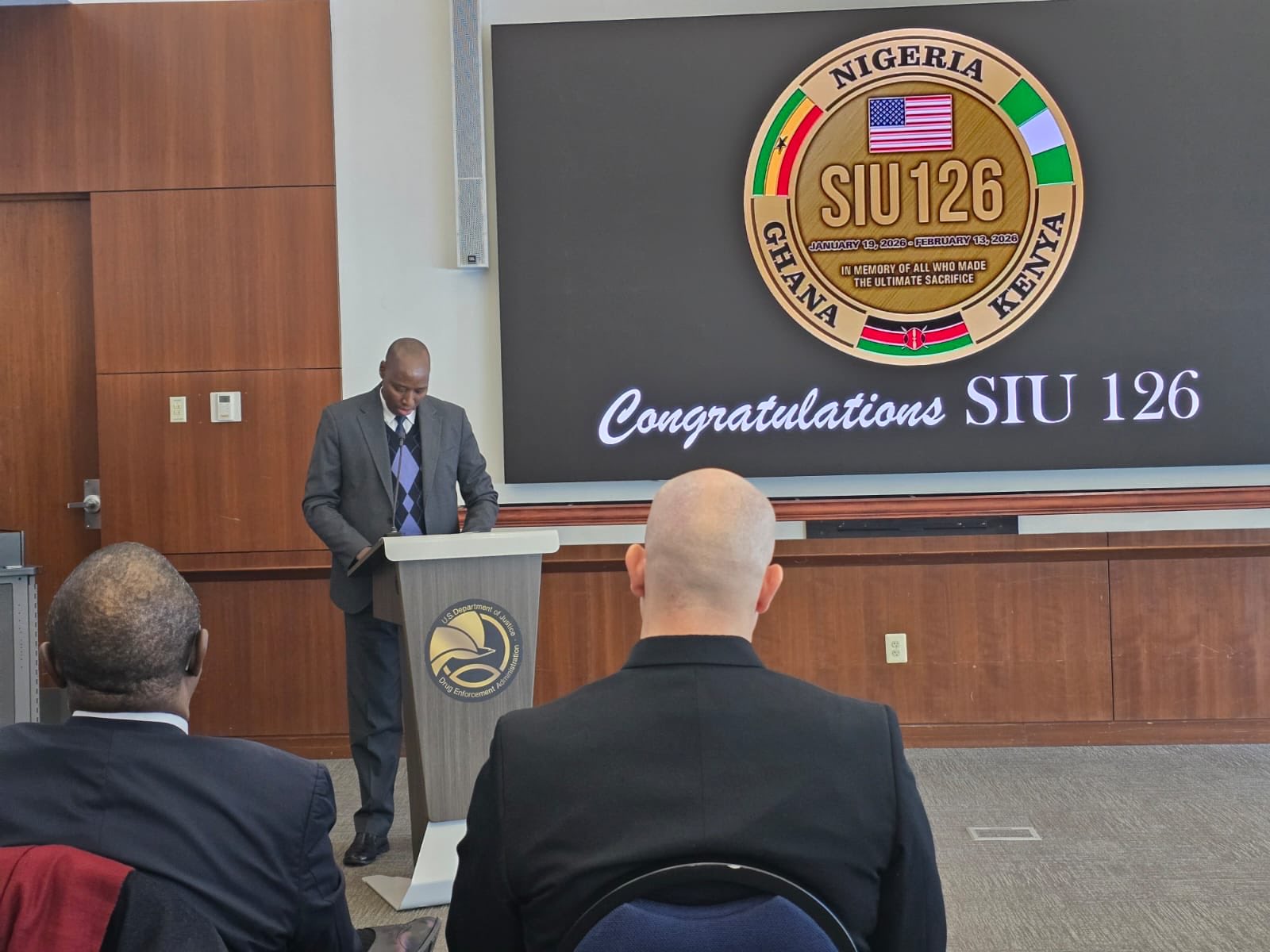
Kenya has stepped up its fight against sophisticated international drug cartels after officers from the Directorate of Criminal Investigations (DCI) completed an intensive narcotics investigations course at the prestigious Drug Enforcement Administration Academy in Quantico, Virginia.
The milestone ceremony marked the conclusion of the Basic Narcotics Investigations Course, a month-long high-level programme designed to sharpen the skills of frontline officers battling transnational drug trafficking networks.
Delivering closing remarks on behalf of Mohammed Amin, Director of the Directorate of Criminal Investigations, Anti-Narcotics Unit (ANU) boss Samwel Laboso, HSC, sounded the alarm over the rapidly evolving narcotics trade.
“Drug trafficking is no longer limited by geography. It has evolved into a highly adaptable, technologically advanced, and financially strong business,” Laboso said.
He warned that powerful transnational criminal syndicates are increasingly exploiting:
International trade routes
Weak border controls
Online platforms
Complex global financial systems
to move illicit drugs and launder profits.
According to Laboso, law enforcement agencies must match the criminals’ speed and innovation with equal flexibility, intelligence, and resourcefulness.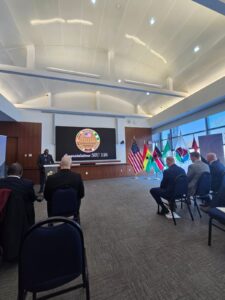
Laboso emphasised that the Quantico ceremony represented far more than a routine graduation.
“It symbolises the strength of partnerships built on trust and mutual respect — and the understanding that no single nation can eliminate the global narcotics trade alone,” he stated.
The specialised course brought together officers from:
Kenya’s DCI Anti-Narcotics Unit
Ghana’s National Drug Enforcement Agency
Nigeria’s Narcotics Control Commission
Participants underwent advanced training focused on dismantling transnational drug trafficking networks through modern investigative techniques.
In his message, Amin reiterated the Kenyan government’s commitment to a holistic anti-narcotics strategy that goes beyond arrests.
The approach includes:
Tough enforcement operations
Prevention programmes
Rehabilitation of affected individuals
Public awareness campaigns
Deepened international cooperation
He stressed that lasting victory against narcotics requires both operational muscle and societal resilience.
Kenya also hailed the Government of the United States and the Drug Enforcement Administration for hosting and supporting the elite training.
Amin noted that America’s continued investment in:
Capacity building
Professional development
Cross-border collaboration
demonstrates forward-looking leadership in confronting one of the world’s most serious security threats.
Through the Sensitive Investigative Unit (SIU) under the ANU, the DCI says it remains firmly focused on:
Protecting communities
Supporting vulnerable populations
Disrupting illegal drug supply chains
Strengthening intelligence-led operations
Officials say the newly acquired skills from Quantico will significantly boost Kenya’s ability to track, penetrate, and dismantle sophisticated narcotics networks operating locally and globally.
As drug cartels become smarter and more globalised, Kenya is betting on elite international training and partnerships to stay one step ahead — signaling a tougher, more coordinated war on narcotics in the years ahead.