
 ADVERT

Dr Davji Atellah, the outspoken trade unionist associated with the Kenya Medical Practitioners, Pharmacists and Dentists Union (KMPDU), is seeking to translate his years of healthcare-sector activism into political support as he prepares to contest the Lang’ata parliamentary seat in the 2027 General Election on an ODM ticket.
A pollcheck circulated by his supporters places Atellah at 38%, ahead of four other aspirants. While the figures suggest a potentially competitive race, the poll’s methodology, sample size, fieldwork dates and sponsor have not been independently established. The results should therefore be treated as preliminary rather than a definitive measure of voter intentions across Lang’ata.
Nevertheless, Atellah’s reported entry into the contest adds another dimension to the constituency’s emerging political landscape, bringing organised labour, healthcare reform and grassroots mobilisation into the parliamentary conversation.
From healthcare activism to elective politics
Atellah’s public profile has largely been shaped by his involvement in the struggle for better working conditions, timely salaries, career progression and improved welfare for medical practitioners.
A pharmacy graduate of the University of Nairobi with postgraduate qualifications, Atellah hails from Kowuor village in Rachuonyo North, Homa Bay County. He attended St Joseph’s Rapogi, where his academic performance helped shape his professional ambitions. Although he initially contemplated a vocation in the priesthood, he eventually pursued a career in the health sector.
His subsequent involvement in trade union leadership brought him into direct confrontation with some of the most difficult questions facing Kenya’s public healthcare system: inadequate working conditions, disputes over remuneration, delayed promotions and the perennial tension between healthcare workers and the government.
His activism has also carried personal risks. During labour protests, he was reportedly assaulted by anti-riot police officers while participating in strike-related demonstrations. Such experiences have become part of the account of his trade union career and the wider struggle over the rights and dignity of healthcare professionals.
Atellah now faces a different test. The ability to mobilise workers around a common grievance does not automatically translate into electoral success. In Lang’ata, he must demonstrate that his advocacy can be converted into practical solutions for residents confronting the everyday challenges of housing, water, education, healthcare, employment and public services.
Pollcheck places Atellah at 38%
The pollcheck results presented by the campaign place Atellah ahead of the other named aspirants, although the figures remain unverified.
The reported standings are:
– Dr Davji Atellah — 38%
– Abbas Khalif — 24%
– Brian — 17%
– Steve — 12%
– Mr Haji — 9%
The percentages add up to 100%, but that alone does not establish the poll’s representativeness or reliability. Independent verification of the survey design and respondent selection would be necessary before drawing firm conclusions about the wider electorate.
Abbas Khalif, described in the supplied campaign account as a first-time MCA from Nairobi South C who is now seeking the Lang’ata parliamentary seat, is placed second at 24%. Brian, Steve and Mr Haji are listed at 17%, 12% and 9%, respectively.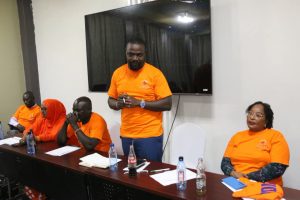
The results provide a snapshot of the political contest as portrayed by the pollcheck, not a verified prediction of the 2027 outcome.
Grassroots engagement at the centre of the campaign
Atellah’s campaign is reported to have expanded through meetings with residents across Lang’ata’s five wards, alongside engagements targeting young people, women, middle-aged residents and members of the middle class.
One of the latest engagements involved 330 Community Health Promoters (CHPs) drawn from the constituency’s five wards. The meeting placed community-level healthcare and household welfare among the issues being discussed as Atellah seeks to broaden his appeal beyond the organised medical profession.
His campaign is also reported to have held town-hall meetings intended to give residents opportunities to raise concerns and discuss local development priorities.
For supporters, such engagements offer a way of building relationships beyond the conventional campaign rally. The ultimate test, however, will be whether the meetings produce credible commitments, measurable programmes and sustained engagement after the political excitement subsides.
Kevin Omondi, a Kibera resident who sells second-hand clothes at Toi Market, is cited in the campaign account as pointing to Atellah’s accessibility, consistent presence and youth support as important elements of his appeal. His assessment reflects one resident’s view and should not be mistaken for a constituency-wide finding.
Healthcare, education and water among campaign pledges
Atellah’s reported agenda places healthcare, education, clean water, youth empowerment and employment opportunities at the centre of his political message.
He has pledged to pursue more accessible healthcare, including preparedness for dangerous infectious diseases such as Ebola. The proposal speaks to the importance of disease surveillance, public-health education, adequately equipped facilities and coordinated emergency response.
He has also promised education bursaries and scholarships, including a stated ambition of 100 per cent scholarship and bursary support to ensure that bright students are not denied opportunities because of financial constraints.
The pledge is likely to attract attention among families struggling with school fees. Its feasibility, however, would depend on clear eligibility criteria, transparent allocation procedures, the number of beneficiaries, available funding and the legal and budgetary framework within which a Member of Parliament can operate.
Affordable access to clean water is another reported priority. Drawing on his experience of growing up in the densely populated Kibera environment, Atellah has linked water access and sanitation to the prevention of disease and the improvement of living conditions.
His wider agenda includes the dignity and welfare of healthcare workers, youth empowerment and the creation of employment opportunities.
These commitments address concerns that matter to many urban households. Their credibility will ultimately depend on how clearly the candidate distinguishes between what he could directly implement as an MP, what would require collaboration with Nairobi County and national government agencies, and what would depend on broader economic conditions.
Can Atellah turn union activism into parliamentary leadership?
The transition from trade union leadership to elective politics presents both an opportunity and a challenge for Atellah.
His experience in negotiations with government officials and his public advocacy for healthcare professionals could provide a foundation for engaging ministries, parliamentary committees and public institutions. A Member of Parliament, however, must also demonstrate competence in legislation, oversight, constituency representation and the responsible use of public resources.
In Lang’ata, that would mean developing practical responses to urban poverty, informal-settlement conditions, youth unemployment, access to education and the pressures facing small businesses.
The constituency’s diverse population will also require a political approach that reaches beyond any single community, profession or demographic group. Sustained engagement, transparent financing and an accessible constituency office could prove as important as campaign visibility.
Rivals face their own test
The emerging contest is not simply a referendum on Atellah’s record. Other aspirants will have opportunities to present their credentials, policy proposals and development priorities to voters.
The pollcheck account identifies weak grassroots structures, inconsistent engagement outside established support bases, limited visibility between election cycles and excessive reliance on publicity or financial inducements as potential vulnerabilities among competing campaigns. These are campaign-side assessments, not independently verified findings about individual opponents.
For all candidates, the challenge is to demonstrate a credible record of service and a practical understanding of the constituency’s needs. Voters will have to weigh public commitments against verifiable achievements, realistic budgets and the ability to work effectively with the institutions responsible for delivering services.
The road to 2027 remains open
Atellah’s reported campaign illustrates how a professional drawn from organised labour can seek to extend his public influence into elective leadership. His healthcare advocacy, union negotiations and proposed grassroots engagements offer the principal elements of his political narrative.
Yet the 2027 contest remains open. The pollcheck figures require independent scrutiny, the campaign promises need detailed implementation plans, and the response of residents across Lang’ata’s five wards remains to be established through credible evidence.
For Atellah, the central question is whether the mobilisation associated with his trade union career can be sustained in a constituency where voters expect tangible solutions to everyday problems.
For his competitors, the same election presents an opportunity to demonstrate their own records, ideas and capacity to serve.
Ultimately, Lang’ata voters will decide which candidate best addresses their priorities at the ballot box in 2027.
The writer is a communication consultant and journalist working in public communications and correspondence
