
 ADVERT
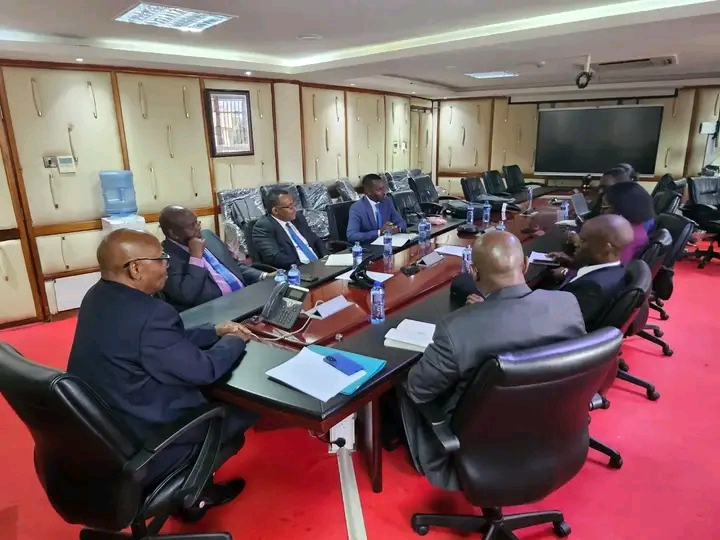
New leadership at KenGen signals renewed institutional commitment as Kenya advances plans for its first nuclear power plant, with coordination, public trust and safety emerging as critical pillars of success.
Kenya’s journey towards nuclear power generation has received a significant boost following a strategic engagement between the Board of the Nuclear Power and Energy Agency (NuPEA) and a delegation from the Kenya Electricity Generating Company PLC (KenGen).
The meeting, which formally introduced KenGen’s new Board Chairman, John Kipngetich Mosonik, and Chief Executive Officer designate, Ronoh Kibet Charles, underscored the importance of institutional cooperation as Kenya advances preparations for its first nuclear power plant.
Beyond the formal introductions, the engagement reaffirmed a shared commitment to strengthening the country’s nuclear energy programme through coordinated leadership, technical preparedness and sustained institutional collaboration.
At a time when Kenya is seeking to diversify its energy mix, strengthen electricity security and support growing industrial demand, the partnership between NuPEA and KenGen represents an important building block in the country’s long-term energy ambitions.
The two institutions have distinct but complementary responsibilities in the nuclear power programme. NuPEA provides strategic coordination, programme development, stakeholder engagement and public education, while KenGen has been designated as the prospective owner and operator of Kenya’s first nuclear power plant.
This places KenGen at the centre of the project’s practical implementation, including preparations for technology selection, procurement, project development, contract negotiations and the eventual construction and operation of the facility, subject to the requisite regulatory approvals.
The distinction between their mandates is important. While NuPEA coordinates the national nuclear power programme, KenGen must develop the technical, managerial and operational capacity necessary to deliver and operate the proposed facility safely.
Their renewed engagement therefore demonstrates that Kenya’s nuclear ambition cannot be achieved through isolated institutional efforts. It requires a coordinated national approach involving government agencies, regulators, industry players, research institutions and the public.
New leadership, renewed commitment
The introduction of Mosonik and Ronoh Kibet Charles comes at an important stage in Kenya’s nuclear energy preparations.
Leadership transitions in strategic public institutions can sometimes create uncertainty, particularly when they occur during complex, long-term national projects. However, they also offer opportunities to inject fresh perspectives, strengthen governance and reinforce institutional priorities.
For KenGen, the new leadership will have the responsibility of consolidating the company’s readiness to undertake the demanding assignment of owning and operating a nuclear power plant.
Although KenGen has accumulated considerable experience in electricity generation, nuclear power introduces additional technical, safety, regulatory and operational requirements that demand specialised expertise and a strong institutional culture.
The company’s preparedness must therefore extend beyond conventional power generation experience to include nuclear engineering, radiation protection, emergency preparedness, nuclear security, environmental management and stringent regulatory compliance.
The engagement with NuPEA offers an opportunity to align institutional priorities and ensure that leadership changes do not interrupt the momentum of a programme whose implementation will span several years and successive administrations.
Nuclear energy and Kenya’s changing power needs
Kenya’s pursuit of nuclear power must be understood against the backdrop of rising electricity demand, population growth, urbanisation and industrial expansion.
The country has made significant progress in developing renewable energy, particularly geothermal, hydroelectric, wind and solar power. These resources remain central to Kenya’s clean energy ambitions and provide an important foundation for sustainable economic growth.
However, as manufacturing expands, businesses modernise and electricity consumption increases, the country must continue exploring reliable sources of large-scale power generation.
Nuclear energy is being considered as a potential complement to the existing energy mix because nuclear power plants can provide substantial quantities of electricity continuously, irrespective of daily weather conditions.
This could strengthen grid stability and support economic activities requiring dependable electricity supplies.
Importantly, nuclear power should not be viewed as a replacement for renewable energy. Rather, it presents an opportunity to diversify the country’s generation portfolio while Kenya continues investing in geothermal, wind, solar and hydropower.
A balanced energy mix could enhance electricity security, reduce vulnerability to fluctuations in weather-dependent generation and support the country’s long-term industrialisation objectives.
Public participation will determine public confidence
While technology, financing and infrastructure are important, public confidence remains one of the most decisive factors in determining the success of Kenya’s nuclear power programme.
Nuclear energy is a complex subject, and public concerns about radiation, accidents, radioactive waste, environmental protection and the safety of surrounding communities must never be dismissed.
Kenyans deserve clear and credible answers about why nuclear power is being considered, how much it could cost, how electricity tariffs might be affected, where a plant could be located and what safeguards would protect people and the environment.
NuPEA has an important responsibility to promote public education and awareness, while KenGen’s involvement provides an opportunity to make discussions about the proposed facility more practical and accessible.
The Joint Engagement Framework established between the two institutions is particularly significant in this regard.
The framework is intended to strengthen national preparedness through public education, stakeholder consultations, technical forums, media engagement and feedback mechanisms.
It also recognises the importance of sustained public participation in site-related activities, information disclosure and inclusive decision-making.
This is an encouraging direction because a project of such national significance cannot be successfully advanced through official announcements alone.
Communities potentially affected by the project must be engaged early, adequately informed and given meaningful opportunities to express their views.
Public participation should not be treated as a procedural requirement to be fulfilled after major decisions have already been made. It must be an integral part of planning and implementation.
Strong institutions and independent regulation
International experience demonstrates that nuclear energy development is not simply an engineering undertaking. It requires strong institutions, effective regulation, competent personnel and an uncompromising commitment to safety.
Kenya has taken important institutional steps towards establishing the necessary framework, including the creation of the Kenya Nuclear Regulatory Authority (KNRA), which is responsible for independent regulatory oversight.
The separation of programme implementation, plant ownership and operation, and independent regulation is fundamental to maintaining accountability.
NuPEA coordinates the development of the nuclear power programme, KenGen is responsible for preparing to own and operate the proposed plant, while KNRA must independently oversee compliance with applicable nuclear safety, security and regulatory requirements.
This institutional arrangement is essential because the interests of project development must never override public safety.
The regulator must be adequately resourced, professionally independent and empowered to enforce the law without political or commercial interference.
Equally important, KenGen must demonstrate that safety is embedded in its organisational culture and not merely presented as a public relations commitment.
Investing in Kenyan expertise
Another critical pillar of the nuclear programme is human capital development.
A nuclear power plant requires specialised professionals in nuclear engineering, physics, radiation protection, safety assessment, environmental management, emergency response, project management and regulatory compliance.
Kenya must therefore begin preparing its workforce well ahead of the construction and operational phases.
Universities, technical training institutions, research organisations and industry players have an important role in developing the specialised skills required to sustain the programme.
Scholarships, international academic partnerships, research collaborations, internships and specialised technical training could help build a pool of competent Kenyan professionals.
While international expertise will remain valuable, Kenya must avoid becoming permanently dependent on foreign consultants and technical personnel.
The ultimate objective should be to develop a strong domestic skills base capable of participating in every stage of the nuclear power plant’s lifecycle, from planning and construction to operation, maintenance and eventual decommissioning.
For KenGen’s incoming leadership, this presents an important institutional responsibility: building a technically competent organisation capable of meeting the demanding standards expected of a nuclear facility owner and operator.
Parliament, counties and government must play their part
The nuclear programme also requires sustained support from national leadership and effective engagement with county governments.
Parliament has a central oversight responsibility through legislation, budgetary scrutiny, treaty-related processes and protection of the public interest.
Members of Parliament and county leaders should be sufficiently informed to explain the programme to their constituents, interrogate its implications and ensure that legitimate public concerns reach the relevant decision-making institutions.
Political support is necessary for a programme of this magnitude, but it must be informed and accompanied by accountability.
County governments, particularly those that may be affected by future site-selection decisions, should be involved in consultations and environmental discussions from the earliest appropriate stages.
The national government must also ensure effective coordination among energy institutions, environmental agencies, security organisations, academic institutions and other relevant stakeholders.
Safety and environmental responsibility cannot be compromised
Kenya’s nuclear ambitions must be anchored in safety, security and environmental responsibility.
These are not optional considerations or issues to be addressed after construction begins. They must inform every decision, including site selection, technology assessment, financing, design, construction and eventual operation.
Although nuclear power offers the prospect of large-scale low-carbon electricity generation, it also presents responsibilities involving radioactive waste management, water resources, land use, emergency preparedness and long-term environmental monitoring.
Environmental assessments must therefore be rigorous, credible and transparent.
The communities surrounding any proposed nuclear power plant site must understand the potential environmental implications, the safeguards available and the mechanisms through which they can raise concerns.
Responsible nuclear development requires the country to proceed at a pace consistent with its institutional capacity, regulatory preparedness and public confidence.
A partnership that must outlast individual leaders
Perhaps the most important message emerging from the NuPEA-KenGen engagement is the need for institutional continuity.
Kenya’s nuclear power programme will extend beyond the tenure of individual board members, chief executives, Cabinet Secretaries and political administrations.
Its success will therefore depend on strong governance systems, institutional memory, professional competence, clear procedures and consistent policy direction.
Both institutions must embrace regular reporting, transparent communication and measurable accountability so that Kenyans can understand the programme’s progress, costs, challenges and milestones.
The country must not pursue nuclear power merely for the prestige associated with joining the community of nuclear energy-producing nations. It must pursue it because a carefully evaluated and responsibly implemented programme can potentially contribute to long-term energy security and economic development.
The meeting between NuPEA’s Board and the KenGen delegation is therefore a timely reaffirmation of a partnership that will be central to Kenya’s nuclear ambitions.
NuPEA brings programme coordination, strategic direction and public engagement, while KenGen carries the responsibility of preparing to develop and operate the proposed facility. Their cooperation, supported by independent regulation and informed public participation, will be critical as Kenya moves towards the next stages of its nuclear energy journey.
Ultimately, the success of Kenya’s first nuclear power plant will not be measured merely by the construction of an impressive facility. It will be judged by the strength of the institutions behind it, the competence of its workforce, the transparency of its decisions, the safety of its operations and the confidence of the Kenyan people.
The renewed partnership between NuPEA and KenGen offers an important opportunity to build that foundation.
Kenya’s nuclear future must be ambitious, but above all, it must be safe, transparent, inclusive and firmly anchored in the public interest.
Photo: Courtesy of NuPEA Facebook page.
