
 ADVERT
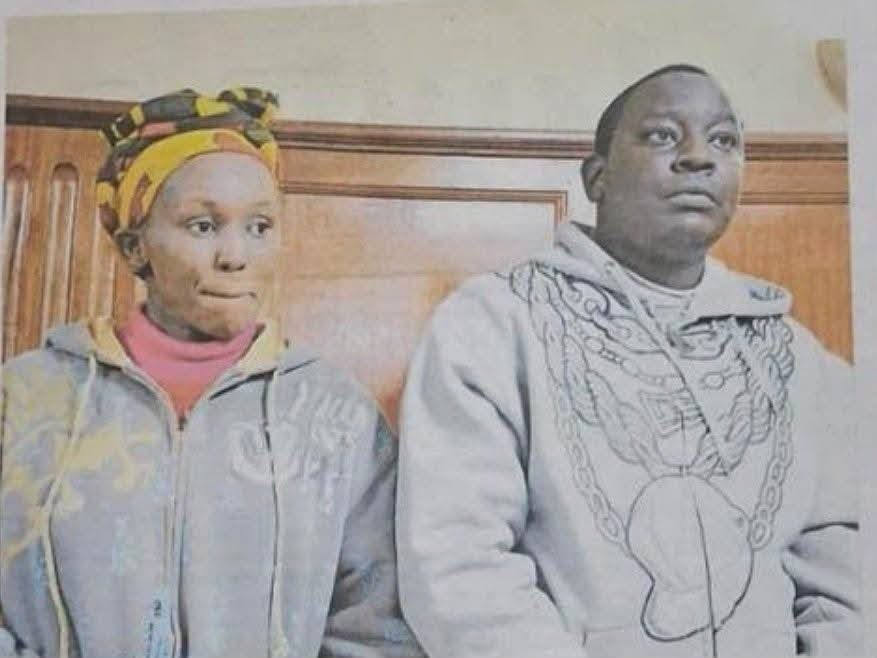
A 14-year-old murder case has ended with a death sentence for former United States International University-Africa (USIU-Africa) student Duncan Livingstone Kimathi, who was found guilty of abducting and murdering fellow student Sarah Akello Aruwa before demanding a Sh100,000 ransom from her family.
Justice Kanyi Kimondo on Thursday, October 29, 2026, sentenced the 37-year-old Kimathi to death after finding him guilty of the murder committed between June 30 and July 1, 2012, in Kiamako area of Githunguri, Kiambu County.
The chilling case involved a calculated scheme in which Akello, then a final-year International Relations student at USIU-Africa, was allegedly lured into a deadly trap before her abductors contacted her family demanding money for her release.
Court proceedings revealed that Akello disappeared after informing a friend that she was going to meet a man she had previously encountered at the university library.
Her disappearance soon turned into a nightmare for her family when a man using her mobile phone contacted her mother, Hellen Atieno Aruwa, demanding Sh100,000 in exchange for her daughter’s release.
Hellen told the court that she negotiated the ransom down to Sh70,000 before reporting the incident at Kasarani Police Station.
Akello’s boyfriend also testified that when he attempted to reach her on her telephone, an unidentified man answered and demanded that Sh100,000 be sent to her mobile money account.
However, the promised release never came.
**A DEADLY UNIVERSITY CONNECTION**
In its findings, the court established that Kimathi and his accomplices had deliberately lured Akello into an elaborate trap before abducting and killing her.
Investigators uncovered a misleading trail involving the name Daniel Muriithi and a telephone contact that Akello had written in her notebook. Although the name initially featured in the investigations, the court established that Kimathi did not know the individual and found that the identity had been used as part of the scheme to lure the victim.
Further investigations led detectives to a house in Savannah, where Kimathi’s girlfriend, identified as Wairimu, lived.
Police recovered Akello’s underwear and a blood-stained top from the premises, evidence that featured prominently in the prosecution’s case.
A postmortem examination painted an even more disturbing picture of her final moments. Medical findings established that Akello had sustained a laceration at the back of her head and bruises around her neck.
The pathologist concluded that she died from manual strangulation.
**COURT FINDS DELIBERATE INTENT TO KILL**
In delivering his judgment, Justice Kimondo found that the circumstances surrounding Akello’s disappearance and death demonstrated malice aforethought.
The judge noted that the victim had been deliberately lured into an abduction scheme involving ransom demands before ultimately being murdered.
The prosecution, led by Millicent Kigira, called 17 witnesses during the lengthy trial to establish Kimathi’s culpability.
The court subsequently convicted him of murder under Sections 203 and 204 of the Penal Code and imposed the death sentence.
The verdict brings a dramatic judicial conclusion to a case that began in 2012, when the disappearance of a promising university student exposed a disturbing intersection of deception, abduction, ransom demands and murder.
For Akello’s family, the judgment marks a significant moment in their long pursuit of justice over a killing that robbed a young woman of her future.

